

👋 Happy Saturday! This weekend’s highlights include a chart on the monochrome shift in automotive colors, how ESP-32 chips can be used as an antenna array to visualize WiFi signals, and an essay from the first employee at Varda Space.
Interesting Chart: A Monochrome Shift in Car Colors
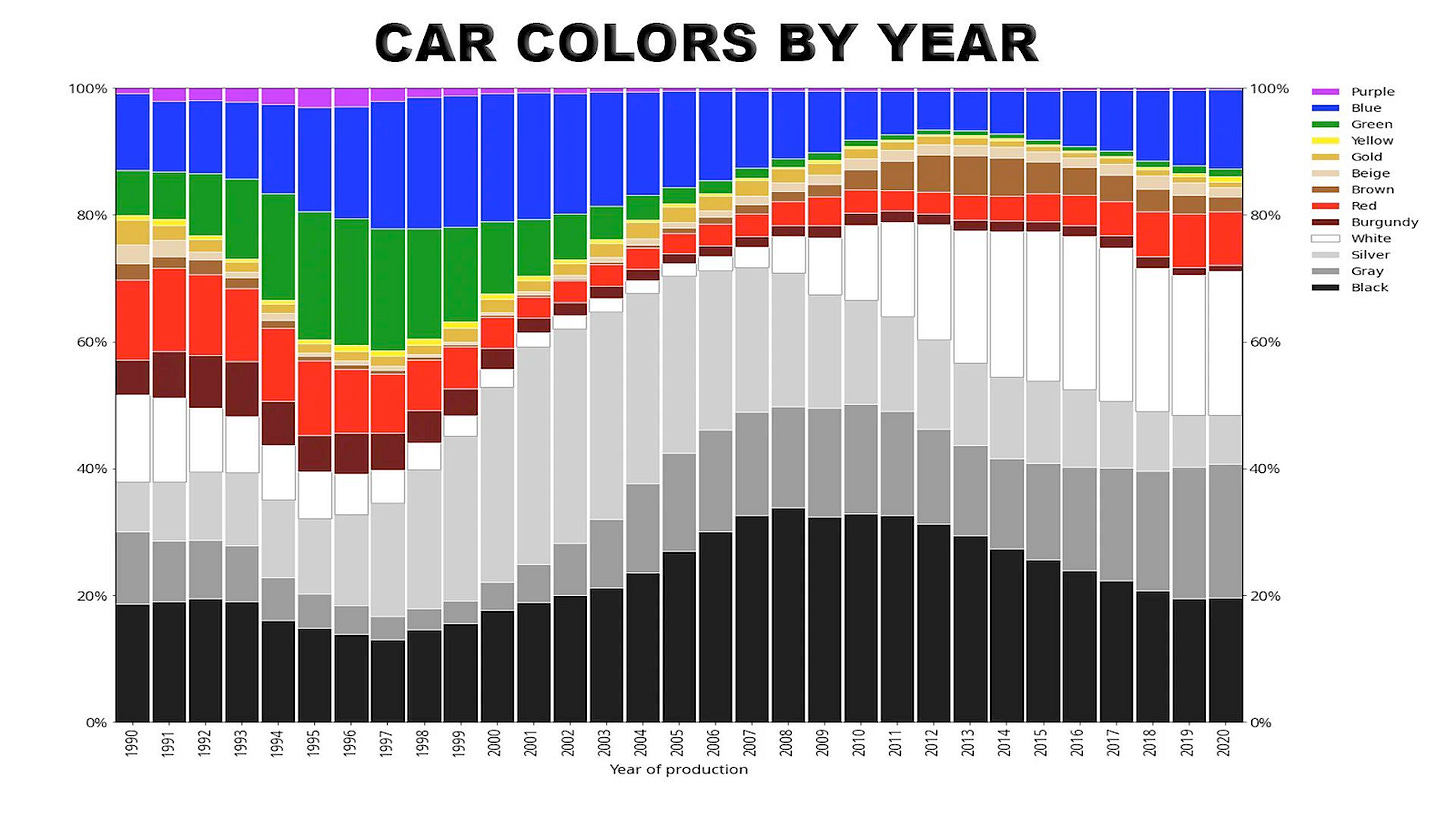
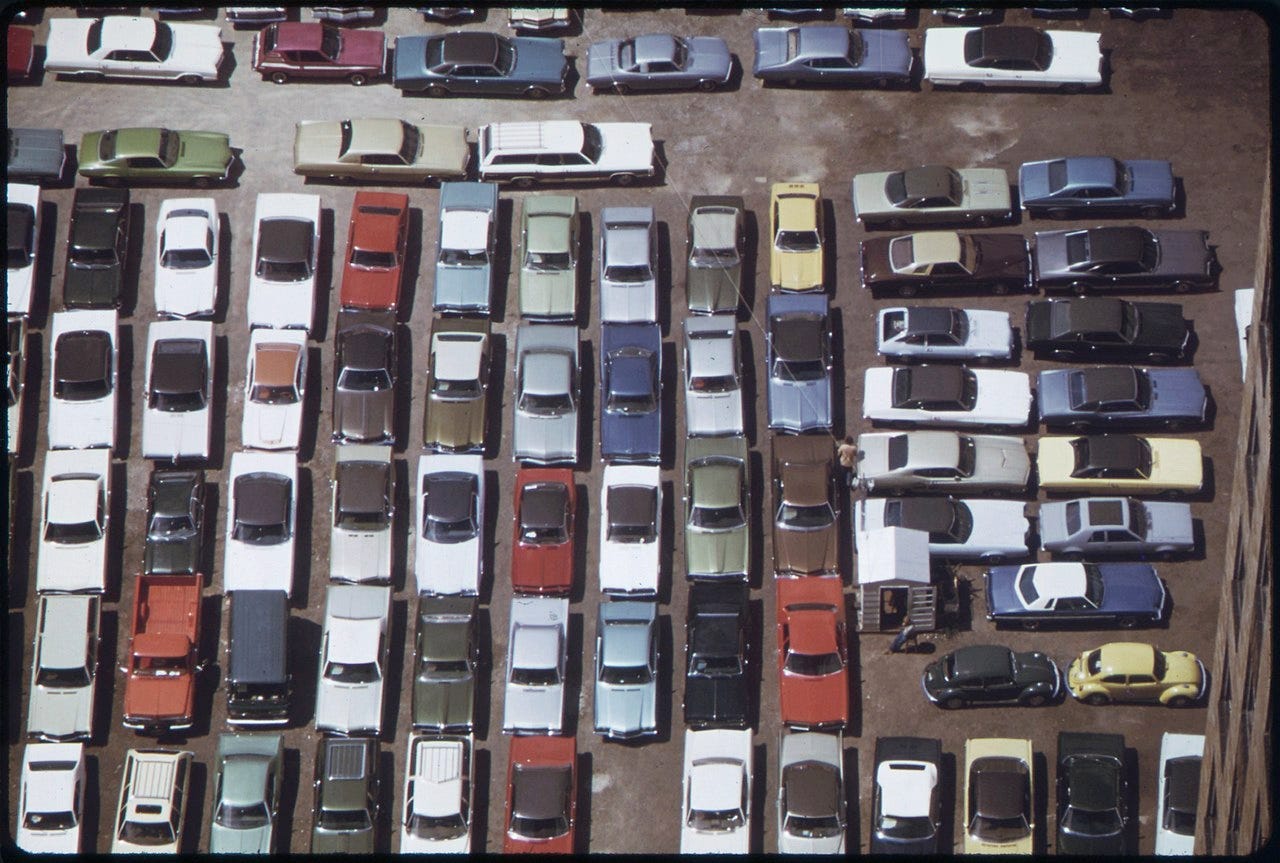
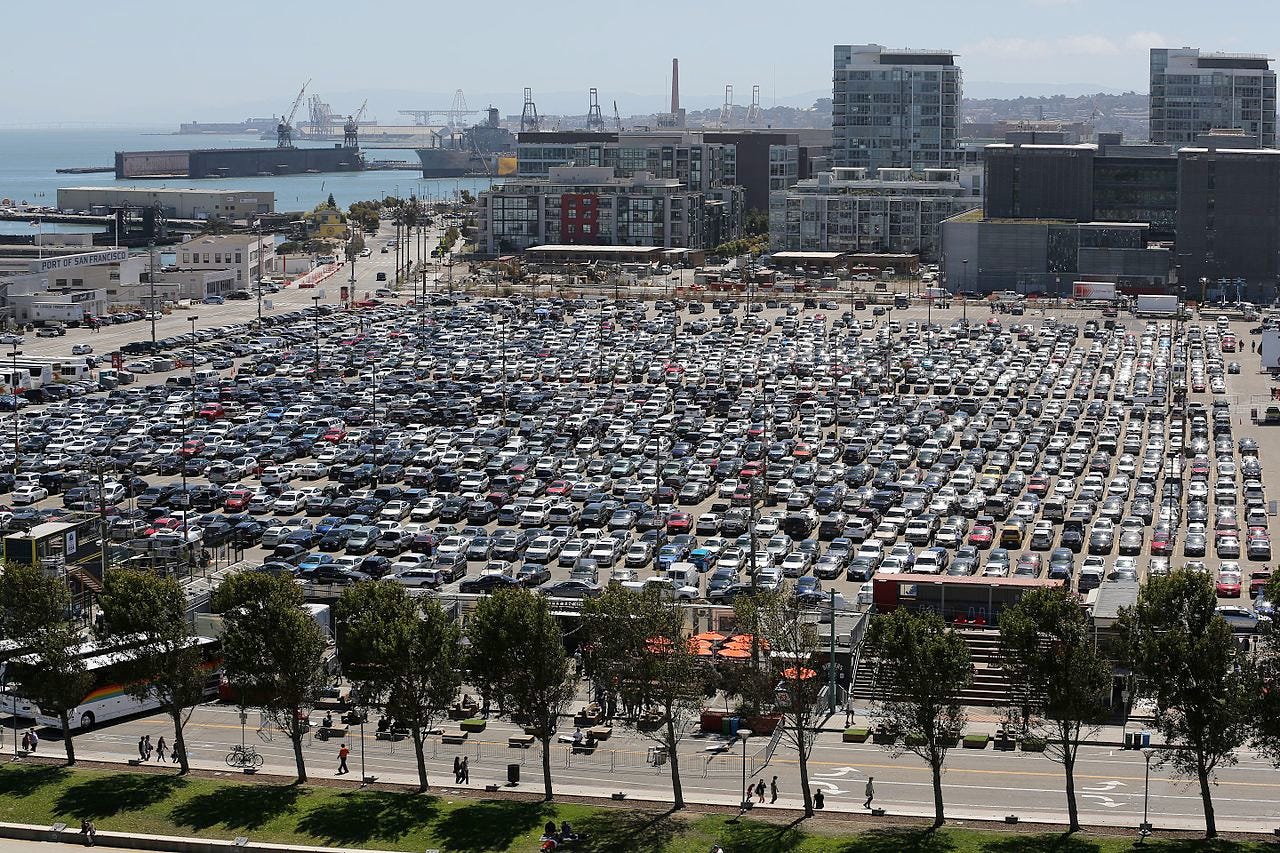
The shift in car colors since the 1990s, where only 20% of today’s cars are non-grayscale colors (white, black, gray, and silver).
Eerily similar is the trend in paint color for the Ford Model T, one of the world’s most popular cars in the early 20th century. When the Model T was introduced in 1908, it was available in several colors including gray, red, green, and blue. It didn’t last long with Henry Ford famously declaring:
"Any customer can have a car painted any color that he wants, so long as it is black." [1]
This shift was driven by the introduction of the first moving assembly line for mass-production automobiles. Offering a single color option, streamlined production and reduced costs, with black providing the added benefits of color consistency, durability, and resistance to fading.
There's no single explanation for the achromatic shift in car colors today, but commercial incentives could be a big one: neutral tones have broader appeal and higher resale value, reducing financial risk for manufacturers.
Interesting Video: Seeing WiFi with a ESP-32 Antenna Array
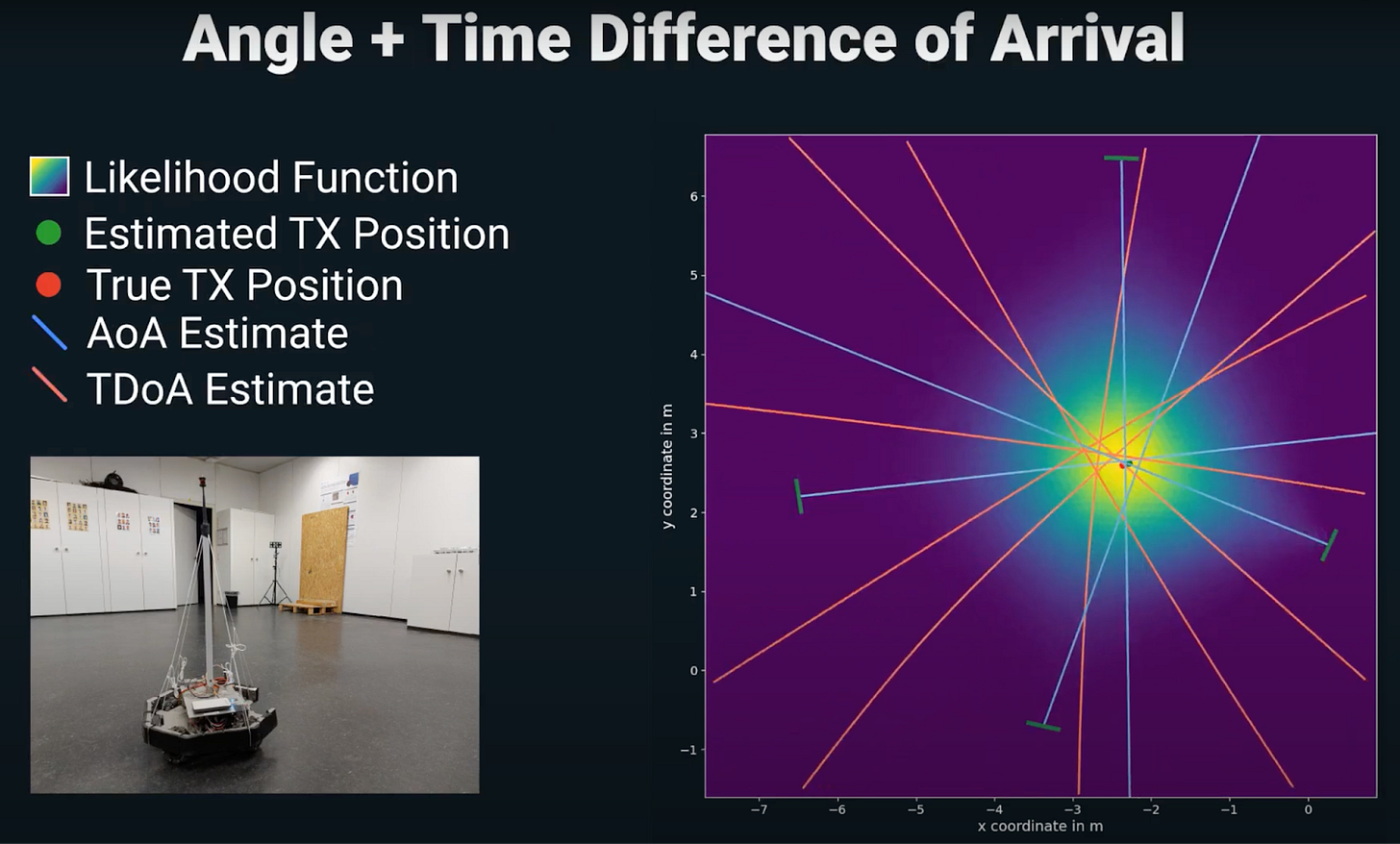
ESPARGOS is a WiFi-based radar system, built using an ESP-32 antenna array that tracks wireless devices indoors. These chips are low-cost microcontrollers with built-in Wi-Fi and Bluetooth intended for mobile devices and IoT products—never meant for more than basic connectivity. By synchronizing multiple ESP-32s for phase coherence and analyzing Channel State Information (CSI) in real-time, a researcher from the University of Stuttgart made it possible to visualize WiFi signals and track device movements with surprising accuracy.
The operating principle is analogous to how radar systems detect objects by measuring reflected radio waves, but here it uses existing WiFi signals instead of active radar pulses.
When used in a system, the antenna array can be trained to detect devices even around corners by leveraging wave reflections using a "Channel Charting" neural network technique.
Interesting Essay: Blueprints for Reindustrialization
No lecture notes or papers this week, instead we’re featuring an essay called “Blueprints for Reindustrialization” by the first employee at Varda Space, a space company using microgravity to manufacture materials. The piece breaks down the state of American manufacturing today, exposing inefficiencies, rampant fragmentation, and an urgent need for a domestic revival.
One blunt take comes from a CNC shop owner who didn’t mince words:
He believed there wasn't a single truly profitable shop in the U.S.—most were simply coasting on fully depreciated machines. While this view is extreme, it underscores the challenges and sentiments within the industry.
On the scale of deployed machinery around the world:
LEGO's Billund injection molding facility is a prime example of what’s achievable: over 1,000 machines running nearly lights-out. Apple is another excellent example, with the legendary football fields of Fanuc Robodrills and Brother Speedios knocking out watch frames by the millions. Yet, our current market setup is fragmented—96% of our manufacturing workforce is in small shops under 50 people. This decentralized model isn’t cutting it. When people say, "it’s too expensive to make parts here," what they really mean is that our output per employee is lagging.
And how other nations get it right with skilled trades training:
"Germany's apprenticeship program (Ausbildung) typically lasts 2–3.5 years, depending on the profession. Apprentices split their time between vocational schools and practical training at companies. They can choose from 342 recognized trades, receive a monthly salary and don't pay tuition fees, and follow a strictly regulated curriculum ensuring consistent skill development."
Manufacturing & Startup News
More leftovers from our weekly research in hardware and manufacturing news:
- Honeywell is splitting into three companies: automation, aerospace, and advanced materials.
- 17 clean energy projects, including solar and battery storage, are planned for former Appalachian coal mines.
- Archer Aviation secured $300M for defense and commercial eVTOL projects.
- QuEra Computing raised $230M for quantum computer development.
- Spark e-Fuels raised $2.48M for sustainable aviation fuel.
- Fullers360 launched Kermadec, a zero-emission electric hydrofoiling tour boat in New Zealand.
- Accure Battery Intelligence raised a $16M Series B to fund expansion of their predictive battery analytics platform.
- Positron raised a $23.5M seed round developing energy-efficient AI chips to compete with Nvidia.
- Mitsubishi Chemical invested $13.5M in Boston Materials for Z-axis carbon fiber technology.
- EnCharge AI secured $100M in Series B for energy-efficient AI accelerators.
- Netri announced a new plant inauguration and raised $5M for organ-on-chip technology.
- Mantle8 raised $3.7M for AI technology to map natural hydrogen deposits.
- Polaris Aviation hybrid-electric seaplane boasts 85% better fuel efficiency.