

👋 Happy Saturday! This week’s edition covers the history of early automotive programs like the nearly abandoned origins of the Volkswagen Beetle, a chart on capital investment waves and how new hardware investment trends compare, and a teardown of the micro-mechanisms hiding inside modern smartphones.
Interesting Lecture Notes: Influential Cars of the 20th Century
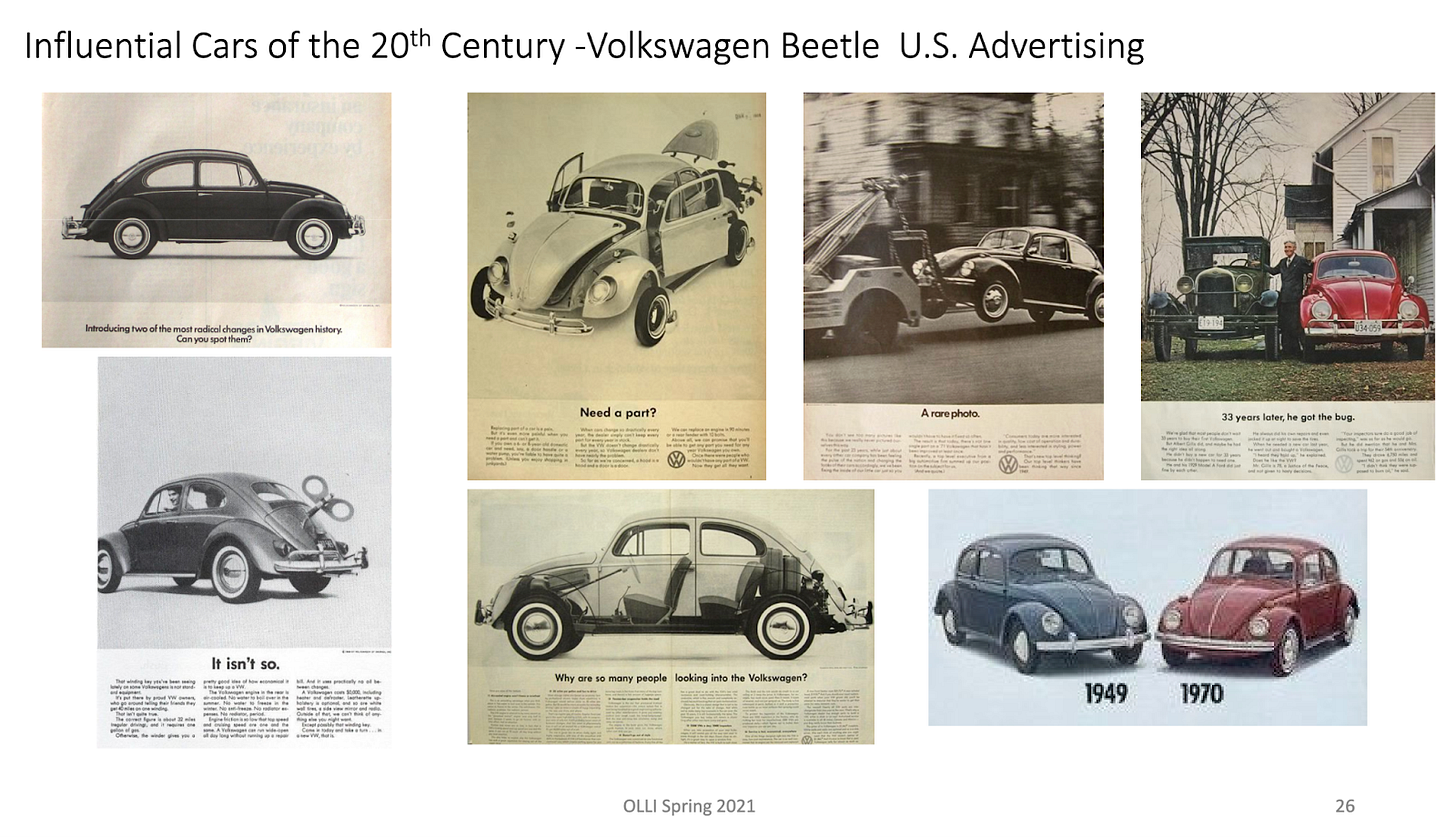
Jim Rauf from the University of Cincinnati has a long-running lecture series on influential cars of the 20th century, with the Volkswagen Beetle as his most revealing example of how early automotive designs took shape. The Beetle didn’t begin development like a standard car in the modern sense, but emerged from a pre-consumer effort to design an automobile for the masses that was nearly abandoned before production.
In early-1930s Germany, car ownership was rare and largely confined to luxury vehicles—fewer than one in fifty people owned an automobile. Volkswagen’s ambition was almost literal in its framing, translating directly to the “people’s car.”
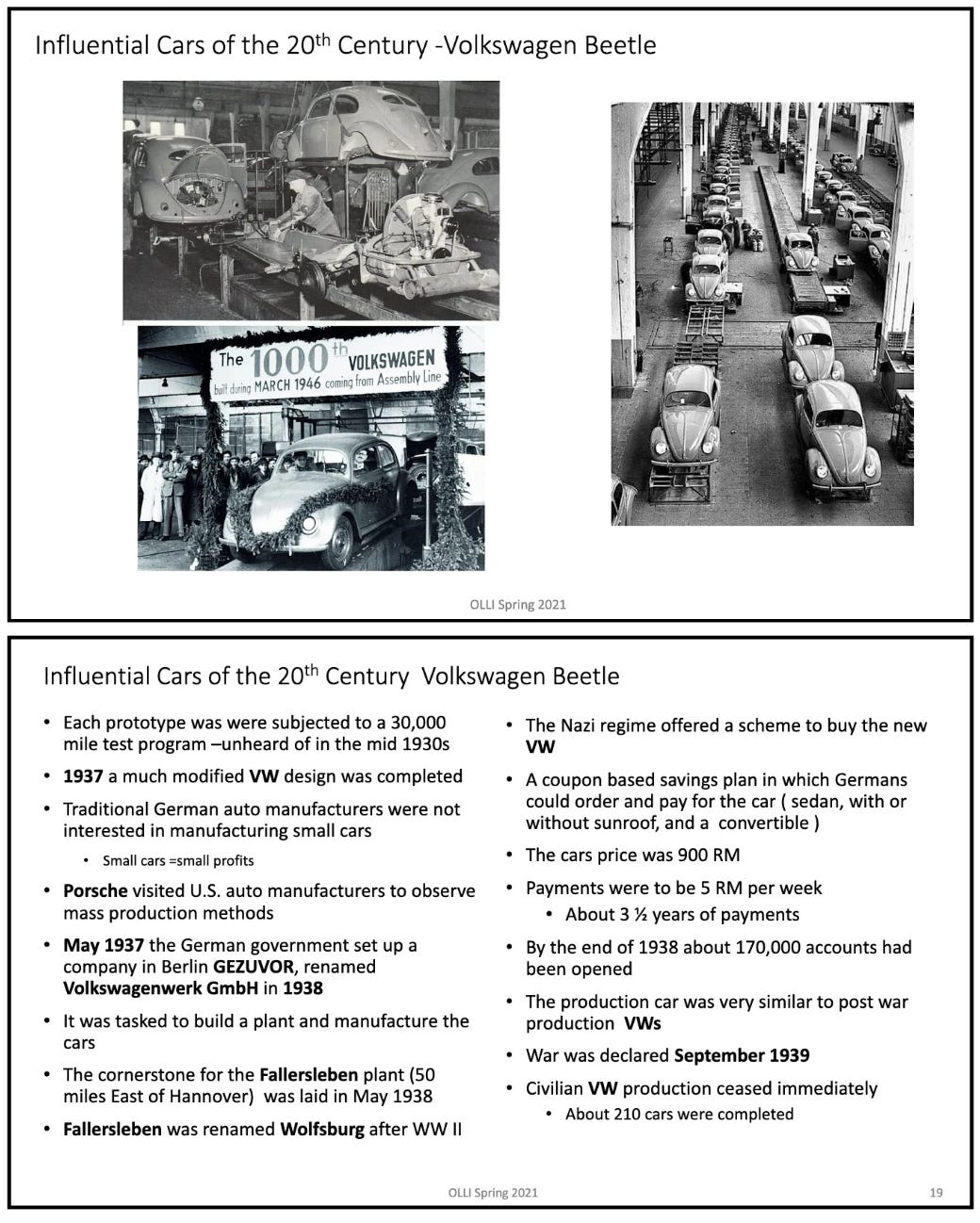
Before ever reaching German consumers, World War II halted civilian production and delayed true mass-market manufacturing until after post-war occupation. Even then, the Volkswagen factory survived only by producing vehicles for the British military. British manufacturers declined to pursue it commercially, concluding the car “does not meet the fundamental technical requirements of a motor-car… is quite unattractive to the average buyer… [and] would be a completely uneconomic enterprise to build commercially.”
A few hard facts from the Beetle program:
- Production run: 65 years (1938–2003)
- Total production: ~20.5 million vehicles sold worldwide
- Last original Beetle was built in Puebla, Mexico, with factories in 5 continents
Interesting Charts: Investment Trends as a % of GDP
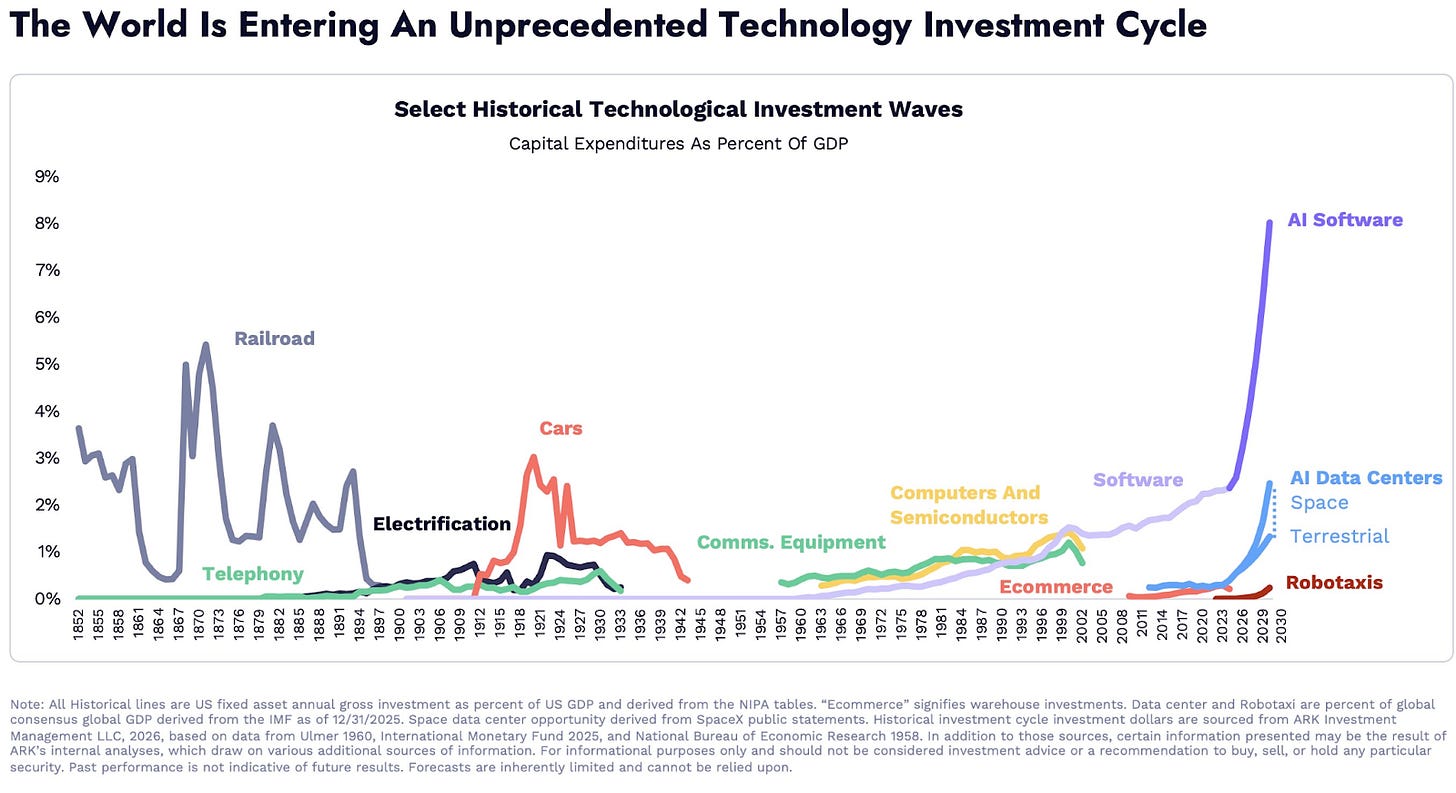
A long-run view of capital expenditures as a % of GDP, showing past investment waves and where today’s AI data centers (both terrestrial and space) and robotaxis fit by comparison.
If AI data centers are truly climbing into the same class of capital intensity as transportation networks and cars, one can hope for infrastructure designed like the CopenHill. A trash incinerator into a ski hill; data centers as hot springs. (Aalo, a nuclear startup, once ran Aalo Spas as an April Fool’s joke.)

Interesting Video: Micro-Mechanisms Inside Smartphones
A teardown and clear visualization of the MEMS devices inside smartphones, showing how silicon mechanical structures are micro-fabricated to flex, vibrate, and sense motion. Covers 3-axis accelerometers and gyroscopes, capacitive sensing, and proof masses where all the individual motions are on the order of nanometers.
On a larger scale, also check out this short on the push-latch mechanism used for SD card readers.
Manufacturing & Startup News
More leftovers from our weekly research:
- Uptool came out of stealth with an AI quoting tool aimed at small and midsize machine shops. The company raised a $6M seed round backed by Khosla Ventures and Eclipse among others.
- Two new company launches in Y Combinator’s W26 batch:
- Fort came out of stealth with a strength-focused wearable, with first hardware shipments planned for mid-2026.
- REV1 launched in the automated drawings space (2D drawings from 3D CAD). Lucas from Loombotic also wrote candidly about why they ultimately pivoted away from a similar approach.
- Conduit raised a $4.7M pre-seed round to develop a no-code automation platform focused on deploying and orchestrating robots, sensors, and factory systems.
- Titan Dynamics raised a $9M seed round to scale its 3D-printed, modular small drone platforms and deployable drone factories aimed at faster, localized production.