Interesting Links 🏭
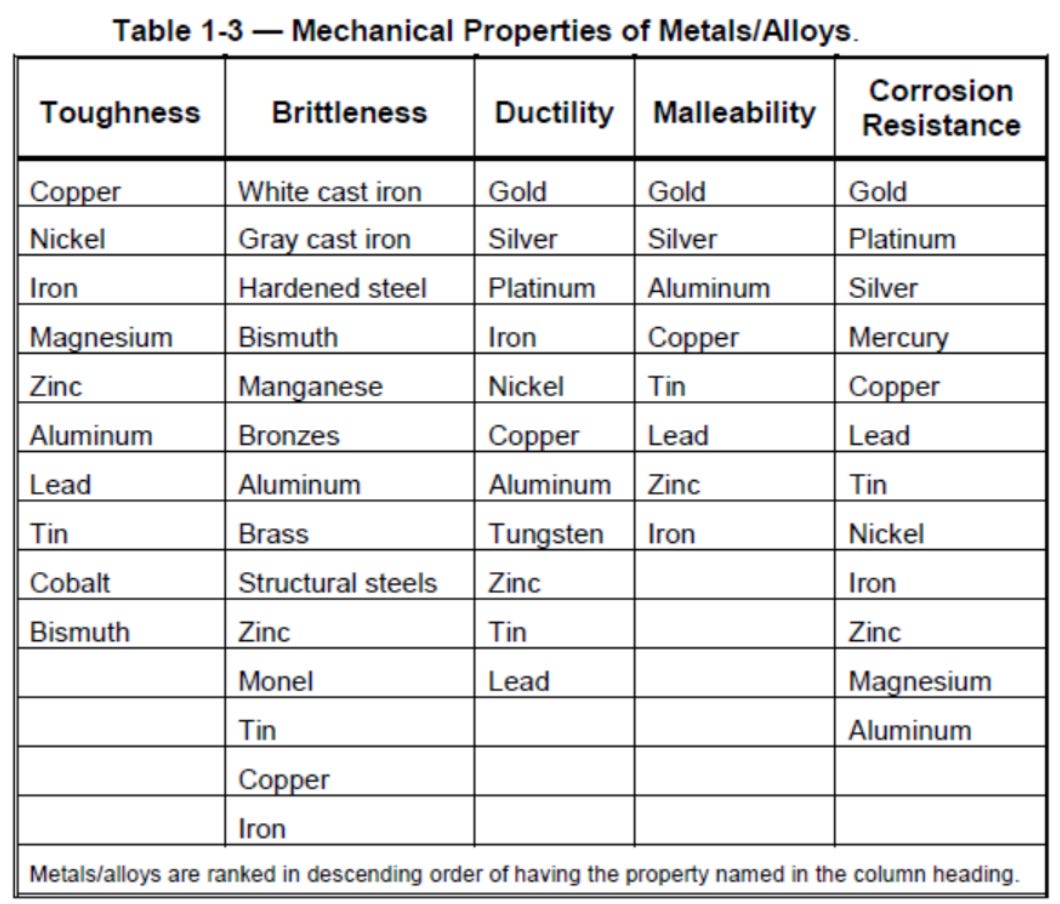
- A handy reference table comparing mechanical properties of common metals/alloys in descending order.
- Op-Amps for Everyone – great reference for anyone interested in analog circuit design. Texas Instruments highlights that integrated circuits (ICs) were first developed in the late 1950s and early 1960s, but it wasn’t until the mid-1960s that Fairchild released the µA709—the first commercially successful IC op-amp. Despite its groundbreaking nature, the µA709 was notoriously unstable and prone to self-destruction under adverse conditions. Today’s op-amps are far more advanced, with gain-bandwidth (i.e. how much an op-amp can amplify a signal at different frequencies) products ranging from 5 kHz to well beyond 1 GHz and voltage ratings reaching up to 1000V.
- Basic Principles of Metallurgy and Metalworking offers a comprehensive overview of the history of metalworking, material strength, and various types of steels and alloys. For instance with Manganese Steel, a small % amount of manganese added can result in a range of material properties for the final product.
- Small amounts (0-2%) of manganese produce steels that are strong and easy to machine.
- Moderate amounts (2% and 10%) result in a steel that is somewhat brittle.
- Higher amounts (11% to 14%) create a tough steel that is highly resistant to wear, especially after undergoing proper heat treatment.
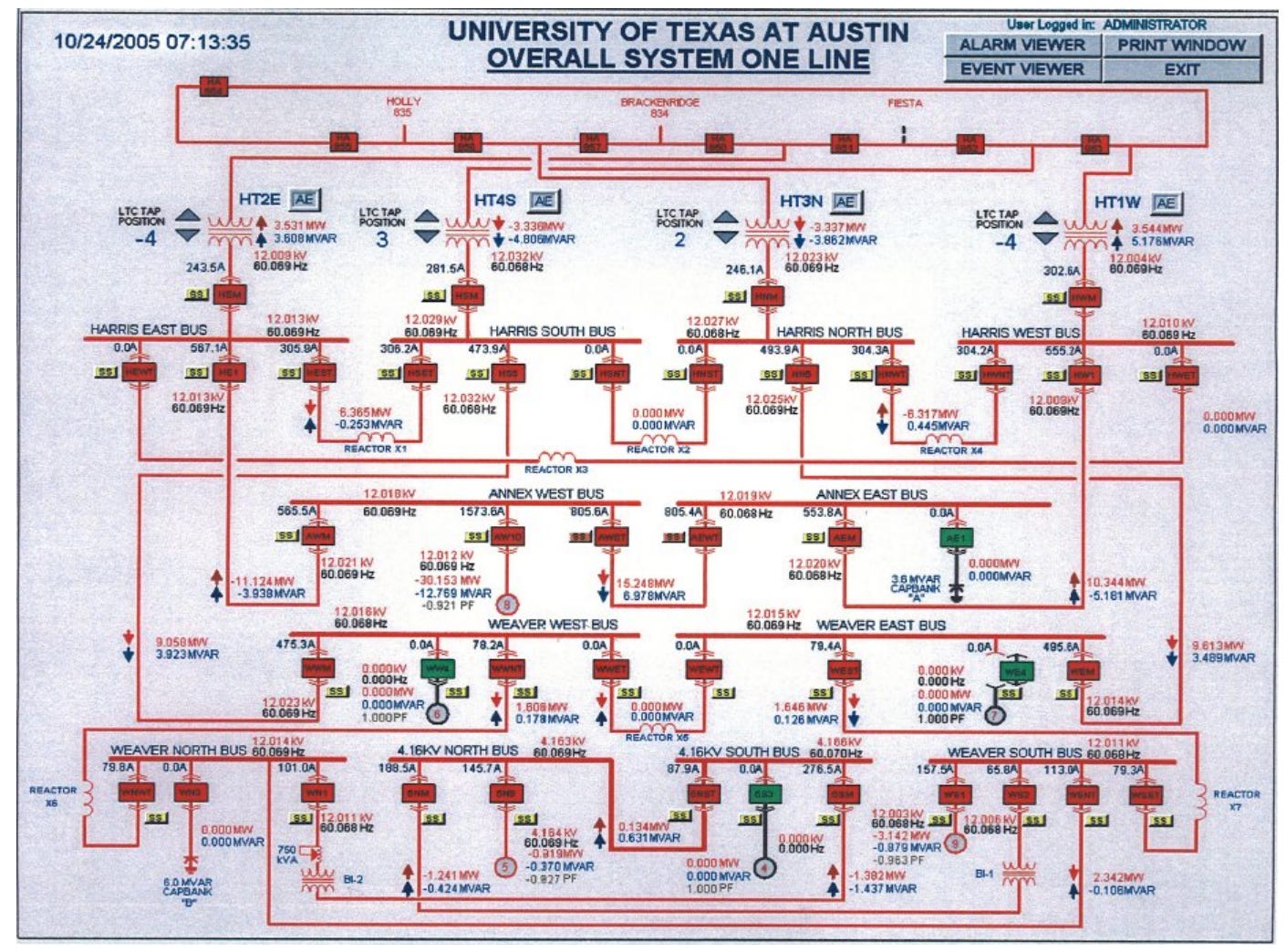
- University campuses, like many manufacturing facilities, require substantial amounts of process steam and power for their operations. These energy needs are often met by a captive power plant, with any additional power requirements supplied by a local utility through a tie-line. The University of Texas at Austin needed a state of the art electrical control and energy management system for their power house. This paper discusses why the system was necessary. The analog data such as amps, volts, MW and MVAr come into the system over a redundant OPC link from an existing SCADA system where the operators also manually operate the breakers.
- SCADA (Supervisory Control and Data Acquisition) is a system that helps operators monitor and control complex operations by collecting data from sensors. OPC (OLE for Process Control) is a communication link that allows different machines to share information with SCADA
- Lecture notes on US electricity markets from the Methods of Electric Power Systems Analysis course at Texas A&M. For decades, electric utilities operated as vertical monopolies with their rates set by state regulators. Utilities had an obligation to serve and customers had no choice. Major change in the US occurred in 1992 with the National Energy Policy Act which mandated utilities provide “nondiscriminatory” access to the high voltage grid. The overarching goal is to maximize economic surplus, which is the combined total of consumer surplus and producer surplus (i.e., their profit).
- This week we spoke with Wiley Jones, co-founder of Doss and a former engineer/Head of Product at Athelas, Verkada, and an early-stage toy startup in China. It's a must-read for anyone interested in starting their own company, as he shares the inspiration behind his current venture and the pain points he encountered in operations and logistics throughout his career. One of our favorite quotes from the interview is about his time at Athelas, where despite being hired as their first Electrical Engineer, he spent a significant amount of time building revenue cycle management (RCM) software.
What does medical billing software have to do with hardware? It turns out that hospitals & providers don’t like doing diagnostics that they can’t easily file claims for, so integrating a robust system was non-negotiable.
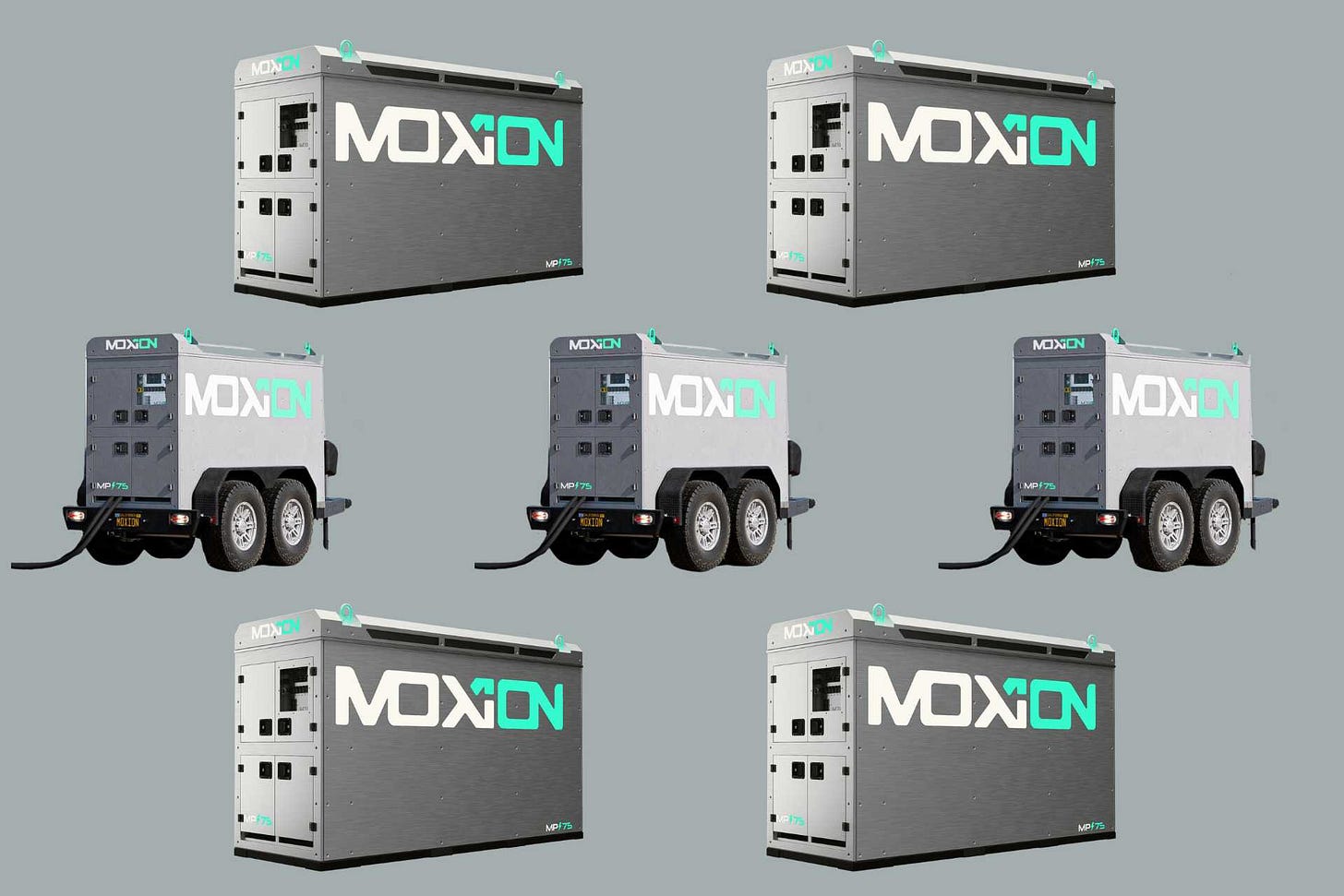
- A post-mortem analysis on Moxion Power, a promising climate startup bankrupt after raising $100 million two years ago. Moxion was a startup that built portable batteries capable of delivering 75 kW of power and an energy capacity >600 kWh. The company attracted significant capital investment and even hosted a visit from California Gov. Gavin Newsom during a manufacturing plant launch event. The primary lessons centered around overconfidence in early customer commitments and aggressive scale-up timelines:
- Growth at all costs is dangerous, especially in hardware.
- Overconfidence in early customer commitments can lead to misaligned expectations and resource allocation.
- Scaling up before resolving technical challenges can amplify issues, leading to costly setbacks in engineering and schedules.
- The article provides an inside look at the production process of the C-130 Hercules at Lockheed Martin's Marietta, Georgia, facility. Each C-130 is composed of over 300,000 parts and takes about 18 months to assemble, with the production line capable of producing 24 aircraft per year. This manufacturing process underscores the complexity and precision required to build one of the most reliable and widely used military transport aircraft, reflecting its critical role in global operations.
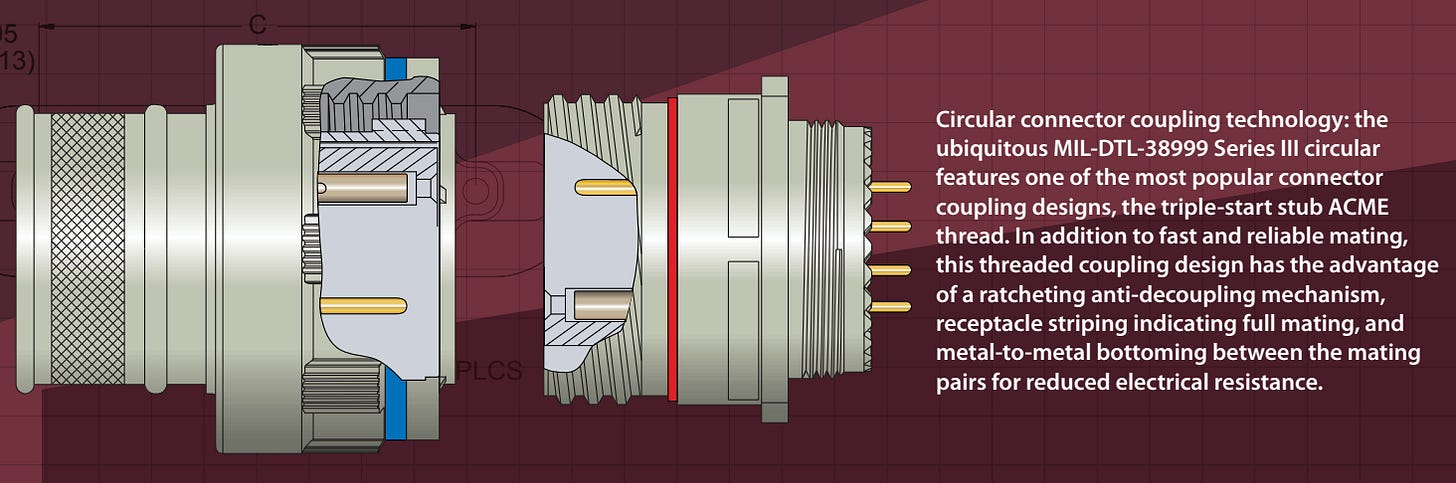
- A MIL-Aero connector guide, a staple reference text for any engineer working in aerospace or defense. As military and aerospace electronics became more prevalent and sophisticated, so did the requirements for interconnection devices. Today, a broad range of circular and rectangular connector types—many specialized for land, sea, air and space applications—are used for the interconnection of electronic systems, sensors, power supplies and other equipment that depend on reliable performance and standards-body guarantees for performance and quality.
- A MIL-Aero connector, short for Military-Aerospace connector, is an electrical connector designed to meet strict military and aerospace requirements. They’re specifically designed to endure harsh conditions like high temperatures, vibration, moisture, and EMI interference. These high-performance connectors have been in use since the late 1930s.
Startup News 🚀
- Some late stage space and defense acquisitions played out this week as Lockheed Martin acquired Terran Orbital for $50M + debt. This is a per share price 75% lower than Lockheed offered four months ago when it rescinded a $1/share offer after Terran’s board did not respond in a timely manner. Terran is a small satellite manufacturer that has struggled to meet revenue expectations after going public via a SPAC.
- Hadrian acquired Datum Source, an AI tool that helps hardware companies find manufacturing partners. Previously Datum Source had raised $5.6M at a $30M valuation, however terms of the acquisition were undisclosed. Hadrian announced that this will be the “first of many acquisitions”.
- Form Energy has been awarded a $147M grant by the US Department of Energy to construct the world's largest energy storage battery in Maine with an 80MW, 100hr capacity (8.5GWhr).
- This large capacity is partly justified as a regulatory workaround, given that New England faces challenges with domestic gas imports. New York prohibits pipelines from crossing overland routes, and the Jones Act makes it prohibitively expensive to ship in cheap American gas. While Form’s technology is innovative, it's a big bet to rely so heavily on novel battery storage technology compared to traditional generation methods.
- DeepSim has launched under the YCombinator program offering 3D physical simulations of extremely complex geometries with length scales spanning 6 orders of magnitude 1000X faster with no drop in accuracy. The company’s simulation technology, which uses AI to automate setting up the simulation, can resolve hot spots in individual transistors (~10 nm in size) within a whole chip (1 cm).
- ElectraLith, an Australian startup backed by Rio Tinto (world's second largest metals and mining corporation),is looking to raise $15M for its direct lithium extraction technology (DLE) which can refine lithium without water or chemicals. The company uses electrodialysis to filter brine containing lithium through a membrane to create lithium chloride. A second membrane purifies it further to create lithium hydroxide, a refined product used in batteries.