This Week’s Highlights
- Inside the World's Most Advanced Radar Factory 📡
- Combustion in Zero Gravity 🔥
- Deep Dive into AI Wearable Hardware 🪦
Interesting Links 🏭
- A factory tour of the world’s most advanced radar factory. Raytheon operates a 1.7m square foot facility in Andover, MA which features a vertically integrated facility with seven surface mount technology assembly (SMTA) lines (250k board/yr capacity), a fully automated robotic assembly area for manual solders and fastener installation, and a massive RF anechoic chamber for testing. The facility is currently building SPY-6 RADAR for the US Navy.
- If you’re curious about the technology, these lecture notes cover the basics all the way up to Pulsed Doppler radar. Common radar applications include military, meteorology, civilian marine, and air traffic. The basic operation principle is simple: a transmitting antenna transmits part of its energy to the direction of measurement, and a collector antenna transmits what is reflected back to a receiver where the signal can be analyzed.
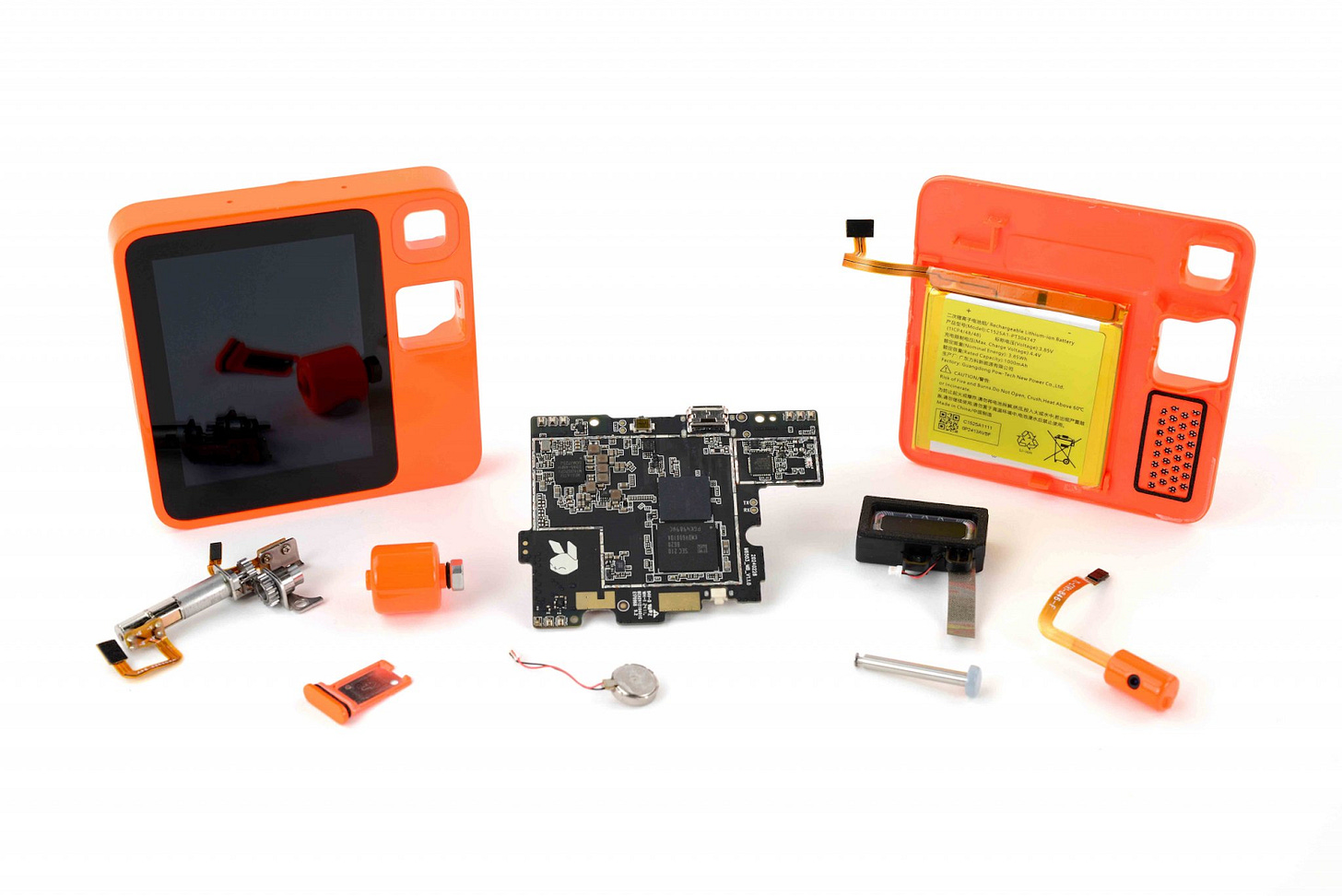
- iFixit recently tackled an exciting project: tearing down two of the latest multi-modal AI wearables from Humane and Rabbit. This in-depth article zeroes in on one standout feature — MEMs laser projectors, a technology unique to the Humane AI Pin.
- This video from the NASA Flame Extinguishment Experiment 2 went viral earlier this week, showing how combustion expands spherically without the influence of gravity. The Flex 2 apparatus was first installed in 2009 and used to study fuel combustion for engine manufacturers. Operating on the ISS, where fire safety regulations are exceptionally strict, this device not only has to comply with these rigorous standards but also needs the capability to precisely adjust the combustion atmosphere it manages.
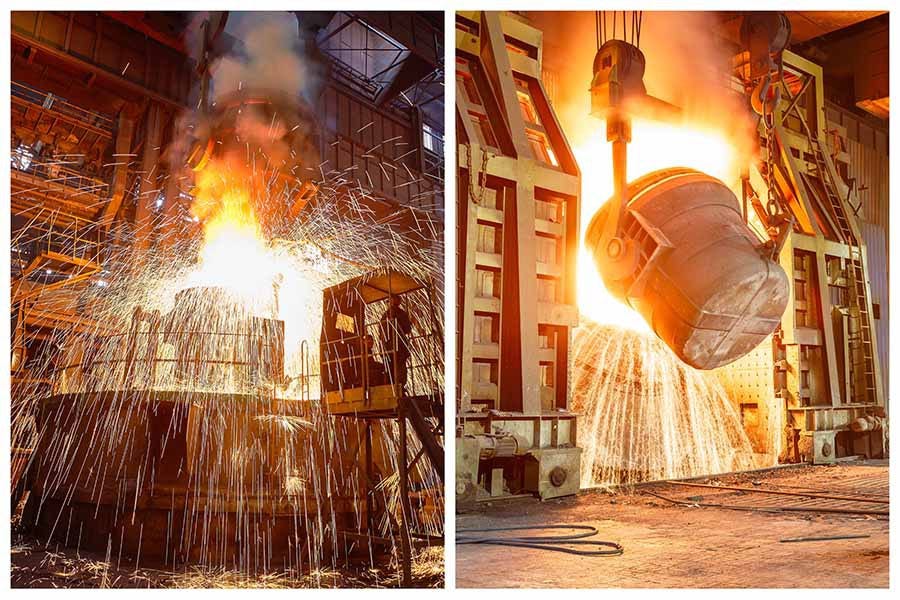
- The difference between an electric arc furnace and a blast furnace. An electric arc furnace, commonly used in steel recycling, works through the striking and expansion of an electric arc, with compressed air used to intensify the process. A blast furnace represents a more traditional approach, utilizing a fuel-based system. It operates by burning a specific coal mixture known as coke to smelt ore into steel.
- An oral history of Bill Carter, who led Xilinx as the CTO for close to 30 years. As a leader in FPGA development Carter was brought on as Xilinx’s 8th employee in 1984, and ended his career as a technical fellow in 2004. After his tenure at Xilinx, Carter shifted his focus to personal passions: gardening, HAM radio, and keeping pace with technological advances through Arduino development. Video interview available here.
- A visual experiment showing how capacitance in X5R MLCC’s changes with temperature. 30% drop in capacitance at just 5C over the temperature range! Multilayer ceramic capacitors are especially susceptible to temperature variation because any thermal expansion between their plates will cause error to cascade.
- NASA’s advanced composite solar sail system (ACS3) launched this week aboard a Rocket Lab Electron Rocket from New Zealand. ACS3 is an experimental project for small satellite propulsion that will catch the solar wind particles and generate thrust for a satellite. Outside of thrust, solar sails could be used to measure space weather and provide early asteroid detection.
- Belgium has begun construction of a massive offshore island that will house interconnect infrastructure for the world’s largest offshore wind farm. Princess Elizabeth Island will house a hybrid mix of HVDC and HVAC interconnects before transmitting power to the mainland. 23 massive caissons are currently being constructed to form the island. A caisson is a large watertight chamber, open at the bottom, from which the water is kept out by air pressure and in which construction work may be carried out under water.
Startup News 🌱
- Blue Skies Space has raised $2.5M in funding to launch the world’s first commercial stargazing satellite which will collect celestial data previously only done so by governments. The company is hoping to sell the data to private researchers who can skip the line at governmental agencies. SPARX and SFC Capital invested.
- Astrobotic has won two NASA SBIR’s to develop space-qualified LiDAR systems this week. This follows an earlier move from the company into defense with its Xogdor reusable rocket, although this is being initially funded by a NASA contract.
- Pulsar has raised $8M for its manufacturing operations analysis platform focused on latin america. Cometa led the round, participating alongside Seaya Cathay Latam, Kayyak Ventures, and Arca Ventures.
- The CHIPS Act has allocated $285M for digital twin research. Digital twins are fully accurate representations of real-world infrastructure. A particular focus is digital twins for semiconductor manufacturing. Semiconductor facilities are extremely complicated and facilities management costs are a major challenge to near-shoring.
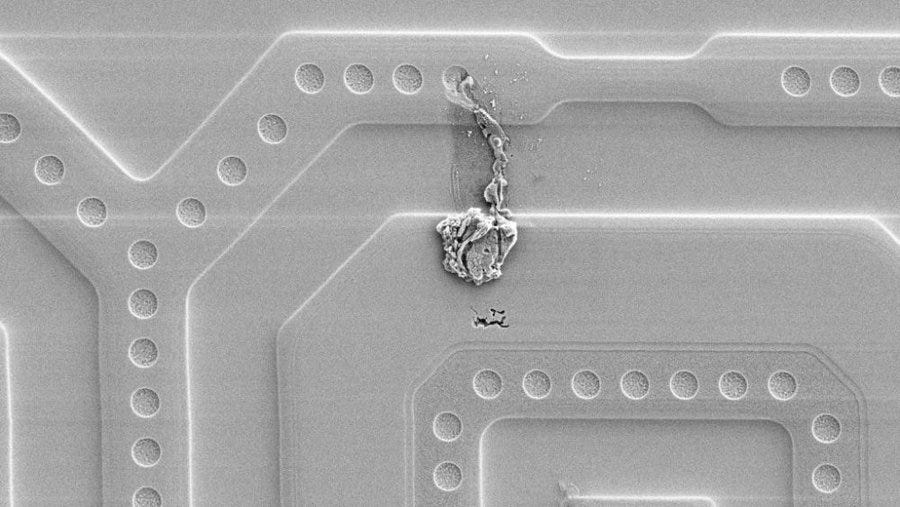
Identifying electrostatic discharge (ESD) damage on a chip.