Highlights this week: 🚀 Vacuum arc thrusters, 🫧 foam science and mfg, and 🍕 edible batteries.
🎤 Featured Interview: Jonathon Beri of Golioth IoT about his experience building a cloud IoT platform for developers.
🔗 Last week’s most-clicked link: Senior design capstone review featured on Digi-Key.
Interesting Links 🔗:
- Powering edible electronics (for pH tracking, gut temp, etc) from the body itself -- this system takes inspiration from the biochemical redox reactions that happens in all living beings, and utilizes riboflavin as anode and quercetin as cathode. The battery cell operates at 0.65 V, a voltage low enough not to create problems in the human body when ingested.
- Foam is used from mattresses to firefighting -- interesting video on foam manufacturing processes. Firefighting foam in particular smothers a fire by separating the fuel from air and cools the fuel and adjacent surfaces below their ignition temperature.
- A collection of completely open source micro vacuum arc thrusters used for propulsion in small satellite applications. They work with companies like Skyline Celestial and even use OSHPark PCB’s. Their twitter is a compelling follow.
- Vacuum arc thrusters work by directing a plasma jet which forms when a very high voltage is applied to the cathode material through an insulator. The cathode is consumed by the plasma and materials such as bismuth are used as fuel.
- As semiconductor packaging transitions from traditional lead-frame and BGA designs to more complex 3D stacked architecture, package design itself is getting incredibly complex -- think thermal, timing, mechanical, power, etc. Great breakdown on the design tool/flow challenges in advanced packaging design from Cadence.
- A high quality visualization of the electromagnetic fields in a simple coil actuator. Flexar is a small rigid-flex PCB actuator and @samerps the PCB-animation-wizard who created the animation, is using his skills to do much more.
- A new kind of soft capacitive sensor can provide very precise directional force measurements and is flexible enough to bend and buckle like skin. This could allow robotic arms to perform more complex tasks such as picking up an egg or handling fruit.
Startup News 🚀💰:
- K2 Space, high-mass satellite manufacturer, just added an additional $7M to its seed round. Seed investors including Countdown Capital are rallying to revive US industry.
- Accelergen Energy, a utility-scale solar and energy storage systems provider have raised $30M coming out of stealth mode this week. Investors are Leyline Renewable Capital.
- Mission Control, a Canadian space-tech startup, has raised $3.25M from Greensky Ventures.
- SnapEDA has rebranded to SnapMagic and launched a new AI copilot for electronics design.
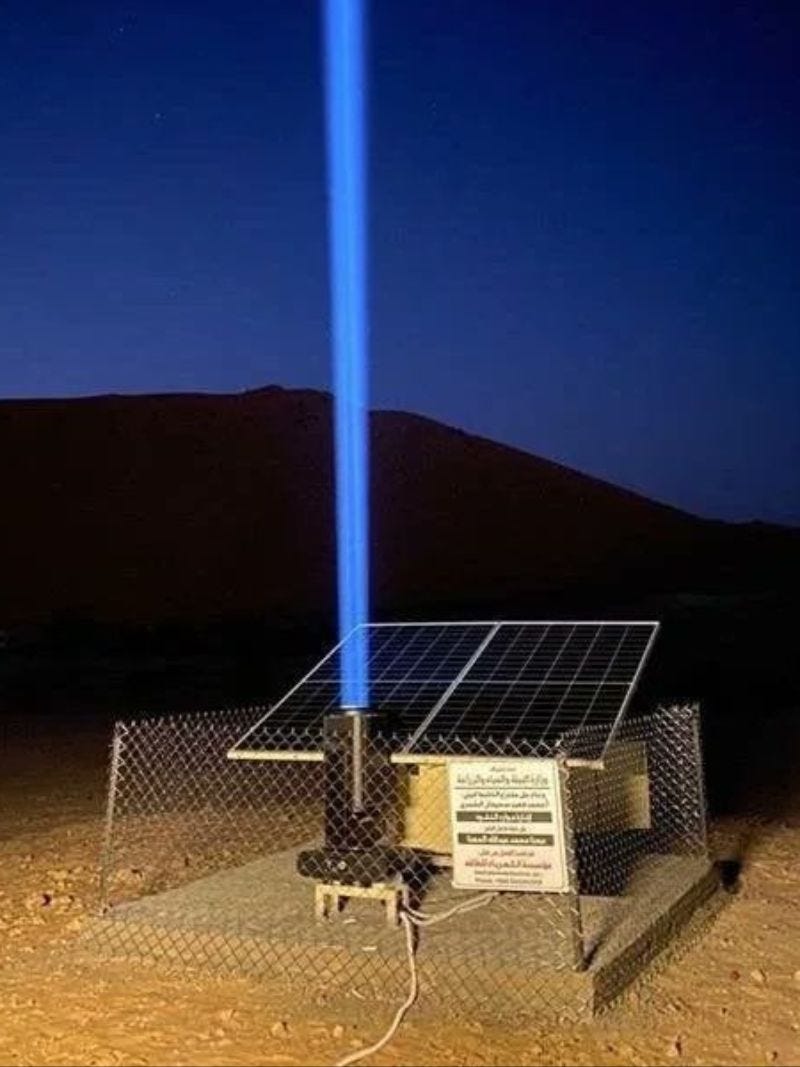
One Interesting Picture 📸: A solar powered laser beam installed in the Saudi Arabian desert to guide lost travellers to water.