Highlights this week: 🏰 the hardware renaissance, 📝 patent frenzy, 🏭 a classic take on job shop manufacturing.
🔗 Last week’s most-clicked link: Simple primer on laser drilling for PCB’s, especially the differences between UV and CO2 lasers.
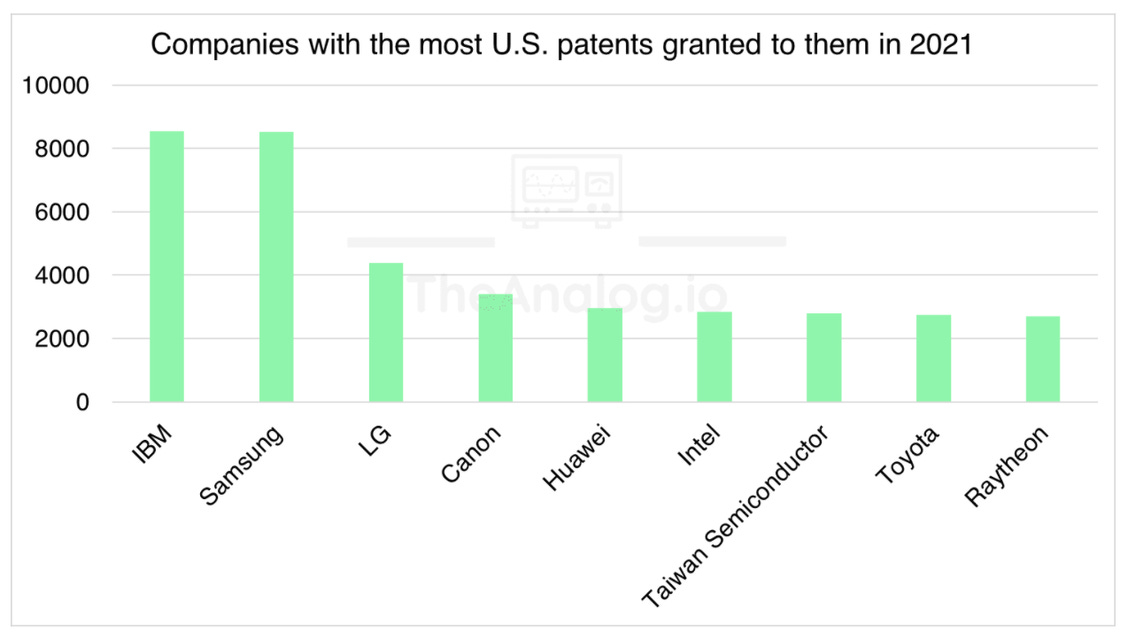
⚡️ Analog Insights: Patent Frenzy 🌪
Startup News 🚀💰:
- European Union lawmakers have today presented a Chips Act: for startups and scale-ups in the sector to reach €2 billion.
- Potential Motors, an Electronic Vehicle tech startup firm, secured $3.2 million in convertible debt seed extension funding led by Montréal-based Brightspark Ventures.
- Verdagy, pioneers of a greener process to make hydrogen, raised a $25 million round, led by TDK Ventures.
- Destinus, the company aiming to create hypersonic autonomous cargo vehicles, raised $29 million in a seed round led by Conny & Co, Quiet Capital, One Way Ventures, and others.
- Cosuno, a construction tech startup, has raised $30 million in a Series B led by U.S. growth equity firm Avenir Growth.
Interesting Links 🔗:
- A 2012 classic from YC founder, Paul Graham, on The Hardware Renaissance and starting a hardware company. “One question I can answer is why hardware is suddenly cool. It always was cool. Physical things are great. They just haven't been as great a way to start a rapidly growing business as software. But that rule may not be permanent.”
- Detailed article about Apple in the Tim Cook era, with emphasis on Apple’s commitment to manufacturing in China. “Jon Rubinstein, a senior vice president for hardware engineering during Jobs’s second tour at Apple, recalls almost having a heart attack in 2005 when he went with Gou to see a new factory in Shenzhen for the iPod Nano—a tiny device 80% smaller than Apple’s original MP3 player—only to find an empty field. Within months, though, a large structure and production line were in place. ‘In the U.S. you couldn’t even get the permits approved in that time frame,’ he says.”
- As early as the end of 2022, SpaceX will launch their Polaris Dawn mission — sending a commercial crew into the highest-ever earth orbit and even enabling a crew spacewalk.
- A simple document that details how to read a datasheet.
- ASML effectively has a monopoly on the EUV lithography market for semiconductors. Their $180M machine has over 100k parts, and zaps molten tin with 50,000 laser pulses per second to generate EUV light.
- A (timeless?) HBR article from 1989 on reforming job shop manufacturing. Printed circuit boards are an instructive example. PCB assembly involves a range of operations: preparation of components, manual insertion of components, limited machine insertion of components, hand soldering, wave soldering, visual inspection. Workers must also study diagrams that illustrate each board’s components and how they connect. Slashing lot sizes (our goal was lots no larger than five boards) and reducing lead times meant that workers had to be able to perform a range of these operations rather than specialize in one. So the department began extensive cross-training. Workers who operated assembly machines were taught how to program them. Everyone was taught how to perform visual inspections.
- The profound potential of elon's new rocket. “Starship won’t just give us the ability to send human explorers to Mars, the moon, and other destinations in the inner solar system, it offers us a two-order-of-magnitude increase in overall operational capability to do pretty much anything we want to do in space. That includes not only supporting a muscular program of probes to the outer solar system, and making all sorts of experimental investigations in Earth orbit economical, but enabling the construction of giant space”.
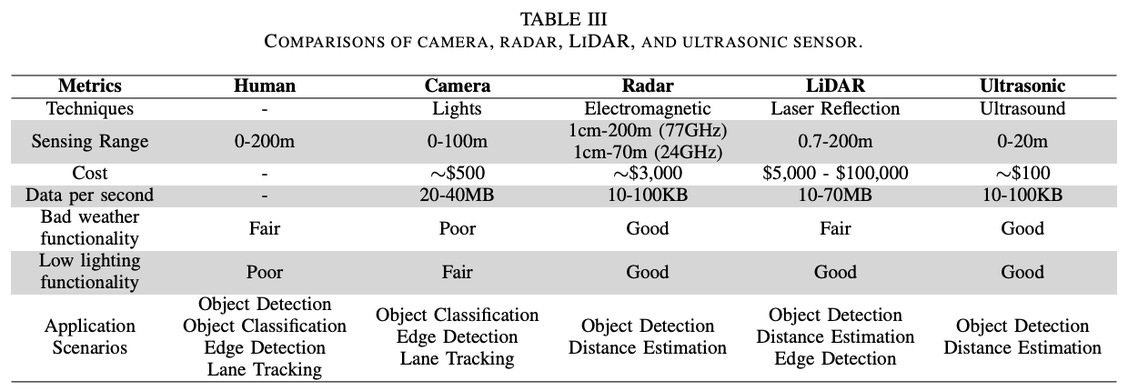
- A useful chart from Computing Systems for Autonomous Driving: State-of-the-Art and Challenges:
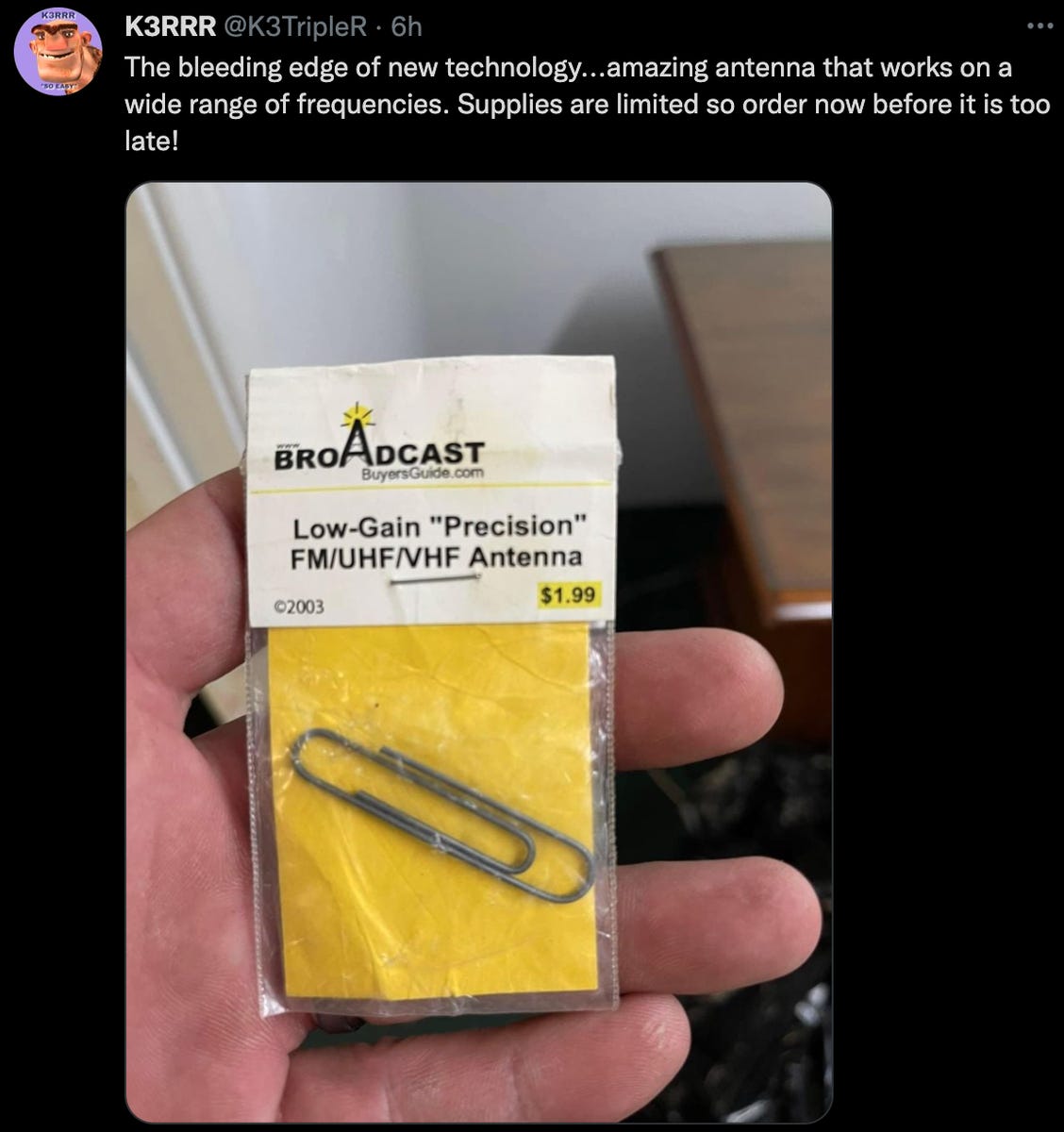
One Interesting Tweet 🐦: bleeding edge🩸