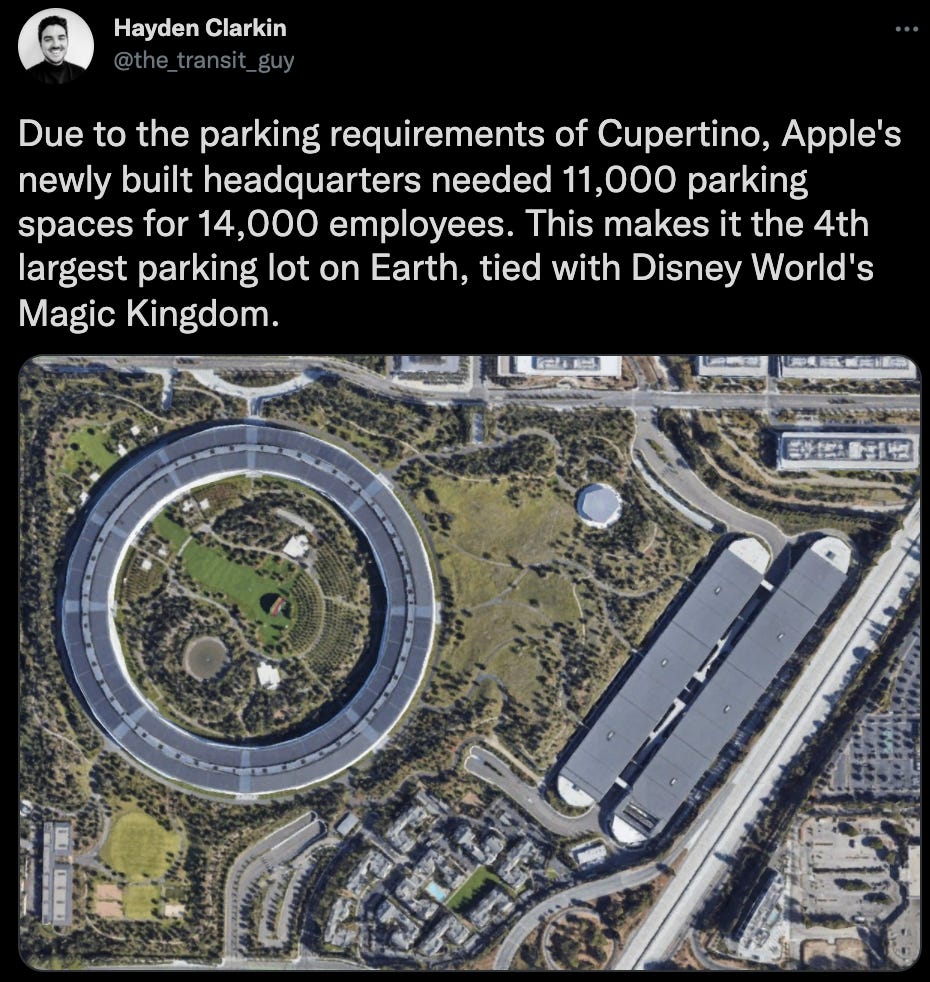
Highlights this week: 🪐 the fundamental theory of physics, ⚡️ a new approach to chip floorplanning, 🍎 Apple’s 11,000 parking spots
🔗 Last week’s most-clicked link: A really great breakdown on the history of the Omicron variant.
FTC suing to block Arm acquisition
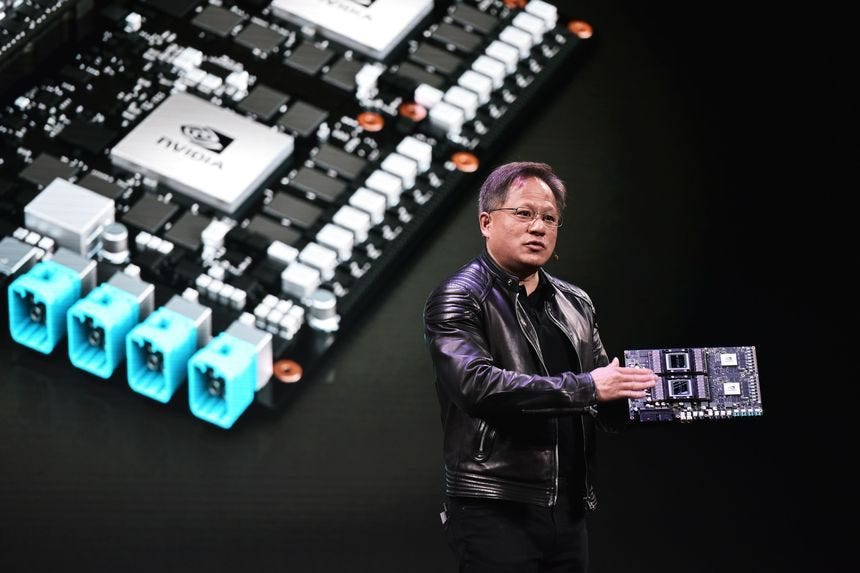
What’s happening: The Federal Trade Commission has sued to block Nvidia's $40 Billion acquisition of Arm.
Some background: The proposed vertical deal would give Nvidia control over the computing technology and designs that rival firms rely on to develop their own competing chips. The FTC’s complaint alleges that the combined firm would have the means and incentive to stifle innovative next-generation technologies, including those used to run datacenters and driver-assistance systems in cars.
According to the complaint, the acquisition will harm competition in three worldwide markets in which Nvidia competes using Arm-based products:
- High-Level Advanced Driver Assistance Systems for passenger cars.
- DPU SmartNICs (advanced networking products used in datacenter servers).
- Arm-Based CPUs for Cloud Computing Service Providers.
FTC Bureau of Competition Director Holly Vedova said "the FTC’s lawsuit should send a strong signal that we will act aggressively to protect our critical infrastructure markets from illegal vertical mergers that have far-reaching and damaging effects on future innovations.”
The administrative trial is scheduled to begin on August 9, 2022. If the deal fails to close, Nvidia may have to pay Arm a penalty of $1.25 billion.
Dive Deeper:
- A lecture breaking down the idea around semiconductor IP and its role in the chip design process
- A Deep Dive into ARM Cortex-M Debug Interfaces
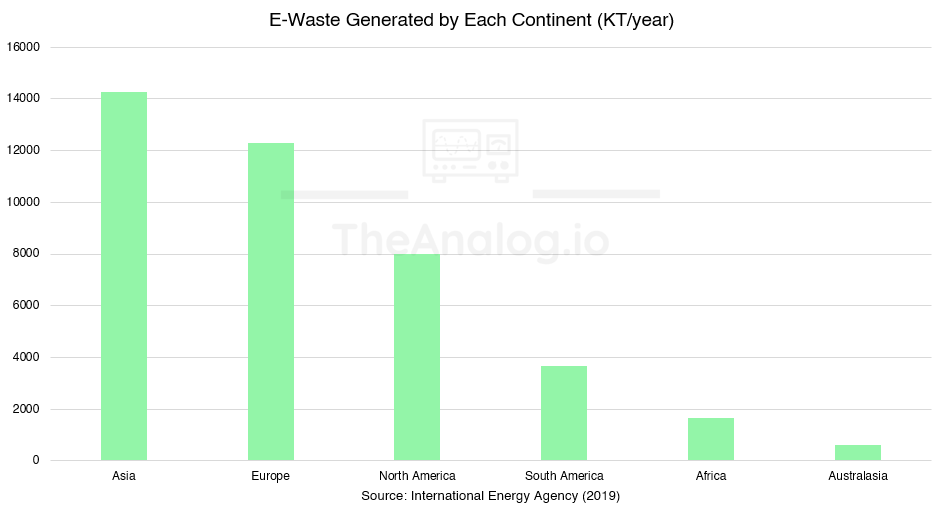
⚡️ Analog Insights: E-waste
Startup News 🚀💰:
- Harrison.ai, a Sydney-based AI med-tech startup, raised a $92.3M Series B led by Horizons Ventures, along with Sonic Healthcare and I-MED Radiology Network.
- ADA Space, a Chinese satellite operator and remote sensing data firm, raised a $55.6M Series B led by Hengjian Holding along with Shenzhen Oriental Fortune Capital, Dongguan Financial Holdings, and others.
- Anuvu, a leading provider of high-speed satellite connectivity and entertainment solutions, raised $50M of growth capital led by Apollo Capital Management.
- Q-CTRL, a Sydney-based quantum control startup, raised a $25M Series B led by Airbus Ventures along with Ridgeline Partners, Main Sequence Ventures, Horizons Ventures, Square Peg Capital, Sierra Ventures, DCVC, Sequoia Capital China and In-Q-Tel.
- Chromatic 3D Materials, a reactive 3D-printing startup, raised a $5M Seed led by Embedded Ventures, with participation from Golden Seeds and Oyat Invest AG.
- Serve Robotics, the autonomous sidewalk delivery company that spun out from Postmates, raised a $13M extended Seed from Uber, DX Ventures, 7-Eleven’s corporate venture arm 7-Ventures, and Wavemaker Labs.
Interesting Links 🔗:
- Moore’s Law is pretty great, but “in many areas, performance gains due to improvements in algorithms have vastly exceeded even the dramatic performance gains due to increased processor speed”.
- YosysHQ, maintainers of Yosys and the accompanying Open Source EDA ecosystem, just taped out a PUF (physically unclonable function, discussed in last week’s issue) on MPW3!
- Stephen Wolfram: Finally We May Have A Path To The Fundamental Theory Of Physics, And It’s Beautiful. “If we ignore all matter in the universe, our universe is basically a big chunk of space. But what is that space? We’ve had mathematical idealizations and abstractions of it for two thousand years. But what really is it? Is it made of something, and if so, what?”
- Genetic algorithms work by evolution. You give them a task, and they keep trying different approaches that either work or don’t work. Adrian Thompson used a genetic algorithm, quite similar to the ones used to find glitches in games, to teach a bunch of computer chips to discern the difference between sounds at two different pitches: 1 kHz (low-pitch) and 10 kHz (high-pitch). He trained a bunch of circuit boards over 5,000 generations to essentially reconfigure themselves into pitch-discerning machines.
- Chip floorplanning is the engineering task of designing the physical layout of a computer chip. Despite five decades of research, chip floorplanning has defied automation, requiring months of intense effort by physical design engineers to produce manufacturable layouts. Google researchers present a deep reinforcement learning approach to chip floorplanning: in under six hours, their method automatically generates chip floorplans that are superior or comparable to those produced by humans in all key metrics, including power consumption, performance and chip area.
- Spintronics: a puzzle game where players discover electronics in a tangible way, using the first physical representation of electronic circuits.
- Amazon makes their own processors. Initially, they made low-cost chips that were secondary to Intel and AMD’s powerful processors. Amazon has just released its latest processor, Graviton 3.
- 7nm chip fab cost/transistor actually went up generation-generation.
One Interesting Picture 📸: Mercator maps distort the shape and relative size of continents, particularly near the poles.

One Interesting Tweet 🐦: Apple 🤯