Interesting Links 🏭
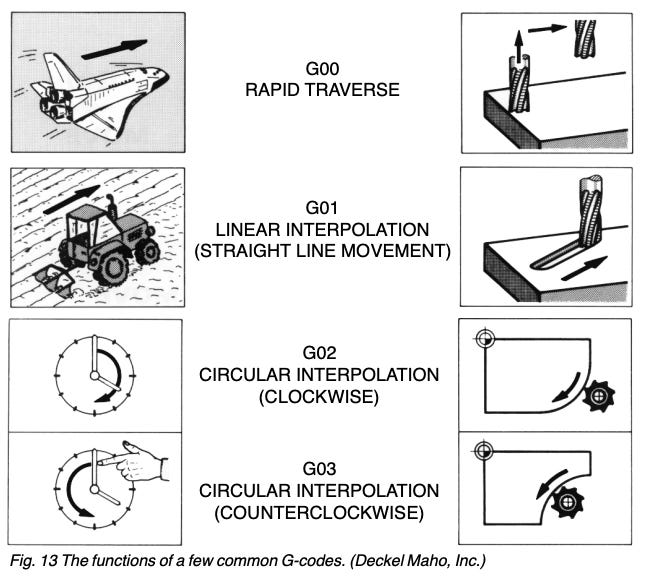
- G-Code (formally known as RS-274) is one of the oldest programming languages still used today and was originally used to control 2-axis pen plotters. In the modern era, G-Code is primarily used in computer-aided manufacturing (CAM) to control automated machines and in slicing programs for 3D printers. CNC Programming Basics is a great introduction on the subject, and if you’re looking for something more practical, G-Code for Dummies covers the complete list of commands for common machines.
- A quick overview of top machine tool manufacturers: Haas and Bridgeport dominate industrial shops (greater power/spindle speed, larger work envelope, tolerances up to 0.025mm), while brands like Tormach offer affordability for hobbyists and prototyping.

- A Bootstrapper's Guide to Re-Industrializing America by the CEO of SendCutSend. If you’re looking to start a manufacturing business or are even remotely curious about what it takes to run a shop, this guide breaks down the mechanics of how to finance and use modern equipment, scale operations, and compete with overseas production. Some observations and our favorite quote below:
- Domestic manufacturers struggle to compete with international competitors on shipment costs in part due to the Terminal Dues System: a set of fees that countries pay each other to cover the costs of delivering international mail. The system tiers countries and charges rates by group, which is one of the contributing reasons to why shipping from China to Wisconsin is cheaper than sending a package to a neighboring state.
“If you sell good equipment with good terms and flexible financing, people will build a business around that equipment. I have seen it happen in 1995 (Modern CNC equipment), 2005 (iPhone Apps), 2015 (CNC plasma tables) and now in 2025 (next-gen manufacturing equipment).” - Jim Belosic

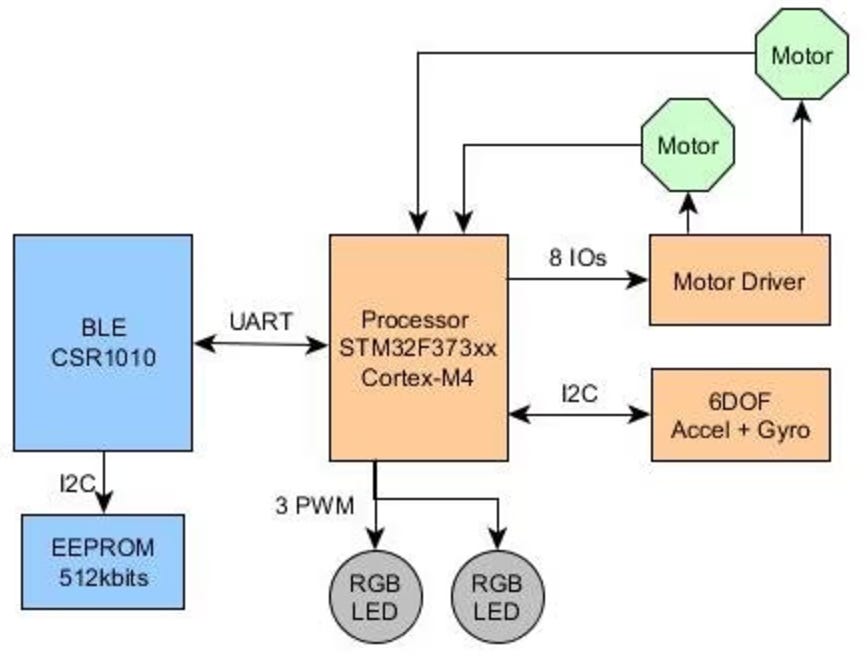
- In the spirit of holiday gifts, here's a holiday teardown of the Star Wars BB-8 robot with a focus on how it uses inertial sensors. Specifically, the toy uses a low power 6 DOF inertial sensor (Bosch BMI055) and combines gyroscope and accelerometer data as input to the sensor fusion algorithm on the STM32F3 microcontroller (MCU). On the controls MCU side, it also interfaces with a BLE chip, a motor controller integrated chip (IC), and a couple hall-effect ICs used to sense spindle position on the brushed DC motors.
- Fun fact: The head is just held in place by magnets encased in plastic, and the toy itself is an adaptation of a remote-controlled ball launched by a toy company Sphero back in 2011.
- A video of cell-sized, soft microbots performing single-cell manipulation. These microrobots are fabricated using high-resolution 3D lithography and can perform tasks like cell collection and transport, 3D cell imaging, and controlled cell-cell interaction with minimal force. Link to the full paper from the University of Szeged here.
- An optimist’s view on the landscape of venture capital in deep tech: in just a decade, deep tech startups have doubled their share of VC funding from 10% to 20%. Read the full Investor’s Guide to Deep Tech by BCG here.

Startup News 🚀
- Ampeco, an EV charging software platform, has raised a $26M Series B to scale their charging network. The company has grown from 62,000 stations to 120,000 in the last year and a half, with another hundred thousand planned in the works. The round was led by growth equity investment fund Revaia.
- HyperHeat has raised $3.6M to bring an oxide ceramic-based industrial electric heater to market capable of reaching temperatures up to 1950C. The company aids to target heavy industries like steel, cement, and chemical plants that contribute over 25% of global CO2 emissions partly due to high temperatures required in the production process. High-temperature heat in these industries is traditionally generated by burning fossil fuels in natural gas burners.
- In the news:
- Westinghouse and Core Power formalized an agreement to pursue development of floating nuclear power plants for coastal regions like islands and ports.
- Near Space Labs has launched a nationwide network of stratospheric balloon drones over the US with 7cm imaging resolution. The network provides visual data to the insurance industry, eliminating the need for aerial inspections.
- Aikido, a startup specializing in offshore wind turbine construction, completed the final assembly of its first offshore wind platform in 40 hours.
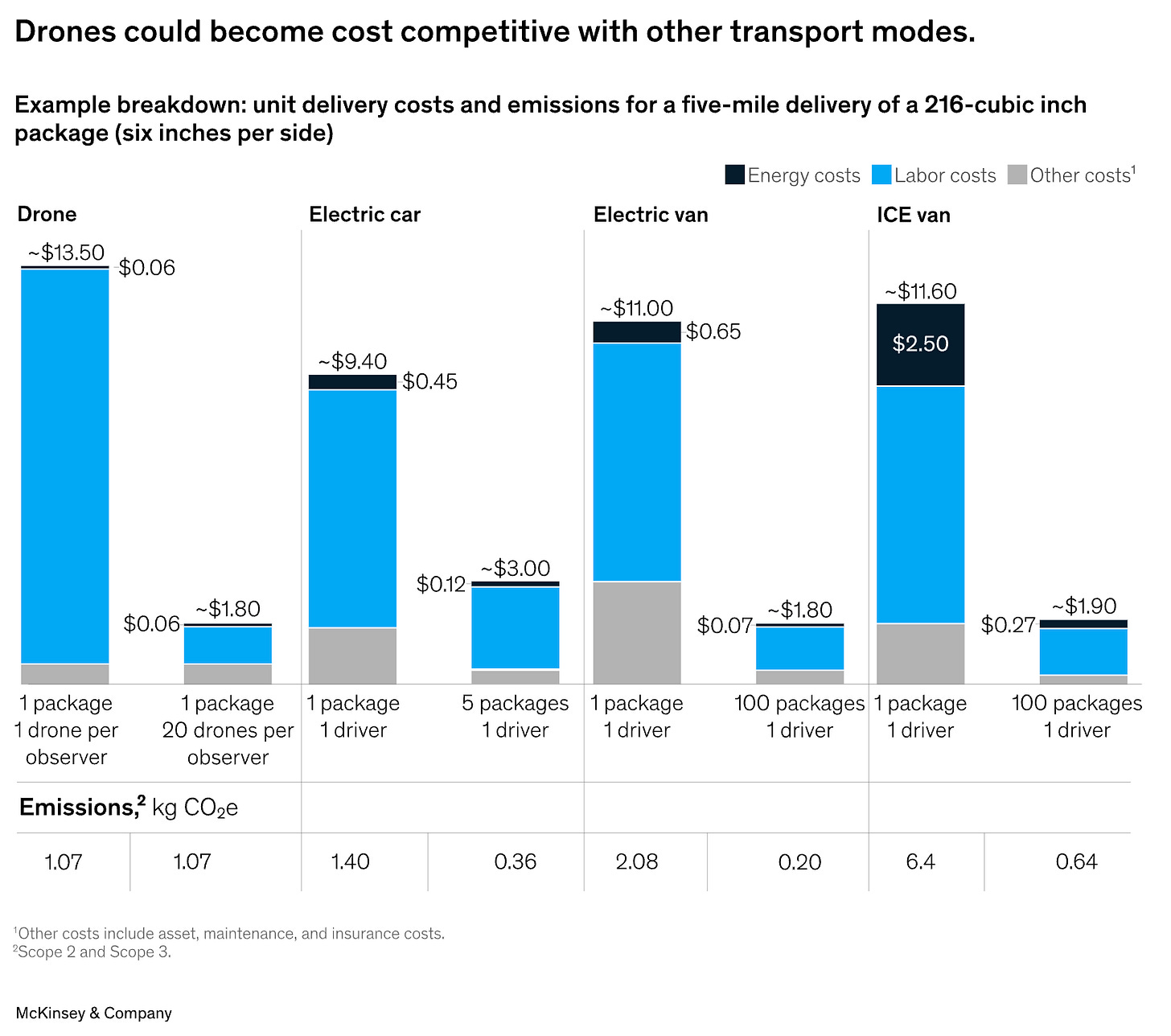
Airbound has raised a $1.7M seed round with the promise of building next-gen. drones capable of reducing the cost of last-mile delivery by two orders of magnitude. The startup is first targeting medical deliveries like transport of blood samples to labs, and plans to scale to grocery and food delivery markets. The drone weighs 2.5 kg, supports a payload of up to 1 kg, offers a range of 100 km, and costs $700 to manufacture. The round was led by Lightspeed with participation from gradCapital.