

Interesting Links 🏭
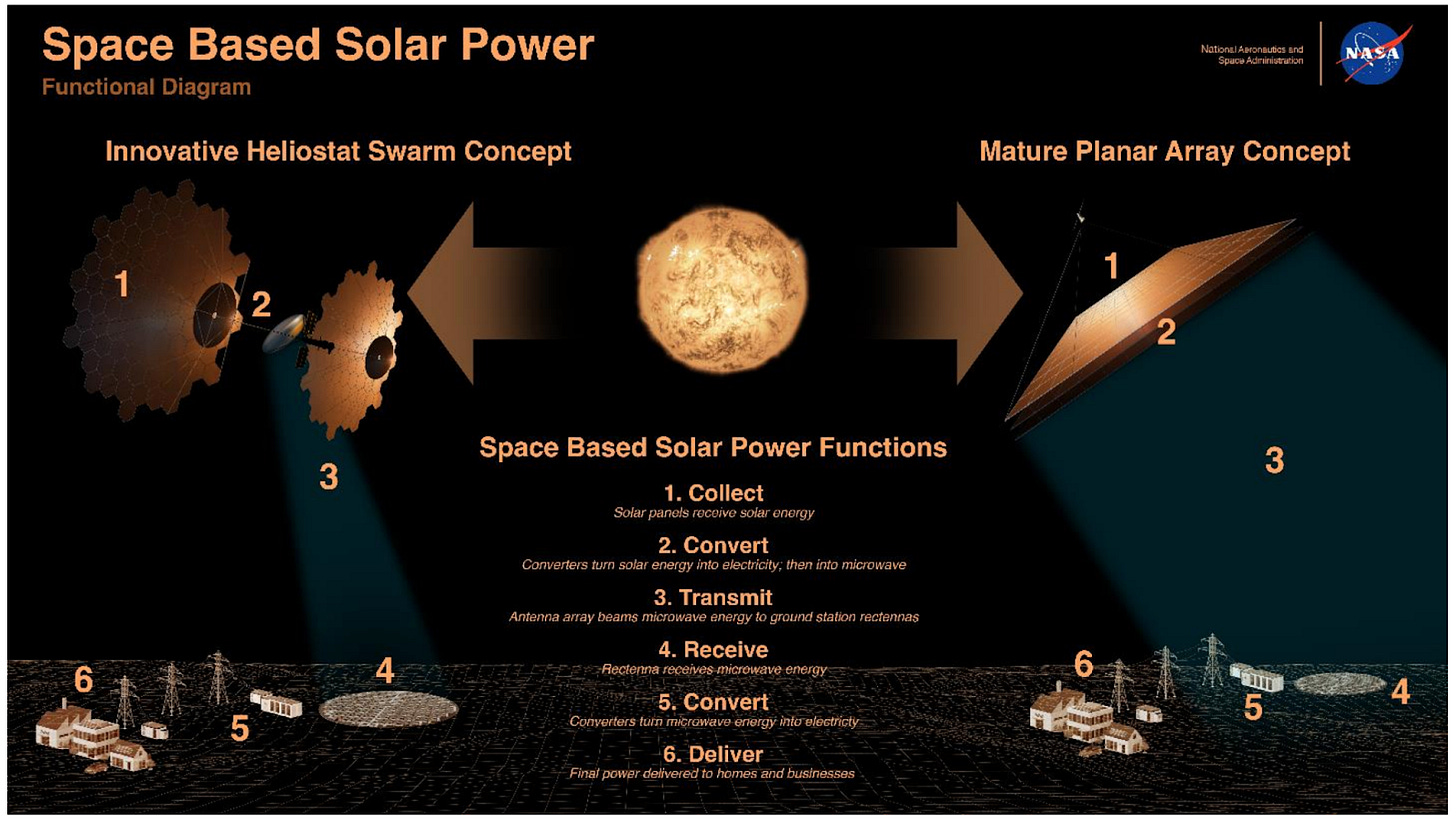
- A couple notes: moonshot ideas (quite literally) gained traction in recent years due to the fact that launch costs are orders of magnitude cheaper. Reusable rockets like SpaceX's Falcon 9 ($2,500/kg) and Falcon Heavy ($1,500/kg) have brought prices down to one-thirtieth of NASA’s Space Shuttle cost and 11 times below the average from 1970 to 2010. Separately, the scale of SBSP concepts is massive with the Heliostat Swarm’s solar panel area dwarfing modern megaprojects: it’d be 27 times larger than the 4,000-satellite Starlink constellation (as of Jan. 2024) and exceed its total mass by 20%!
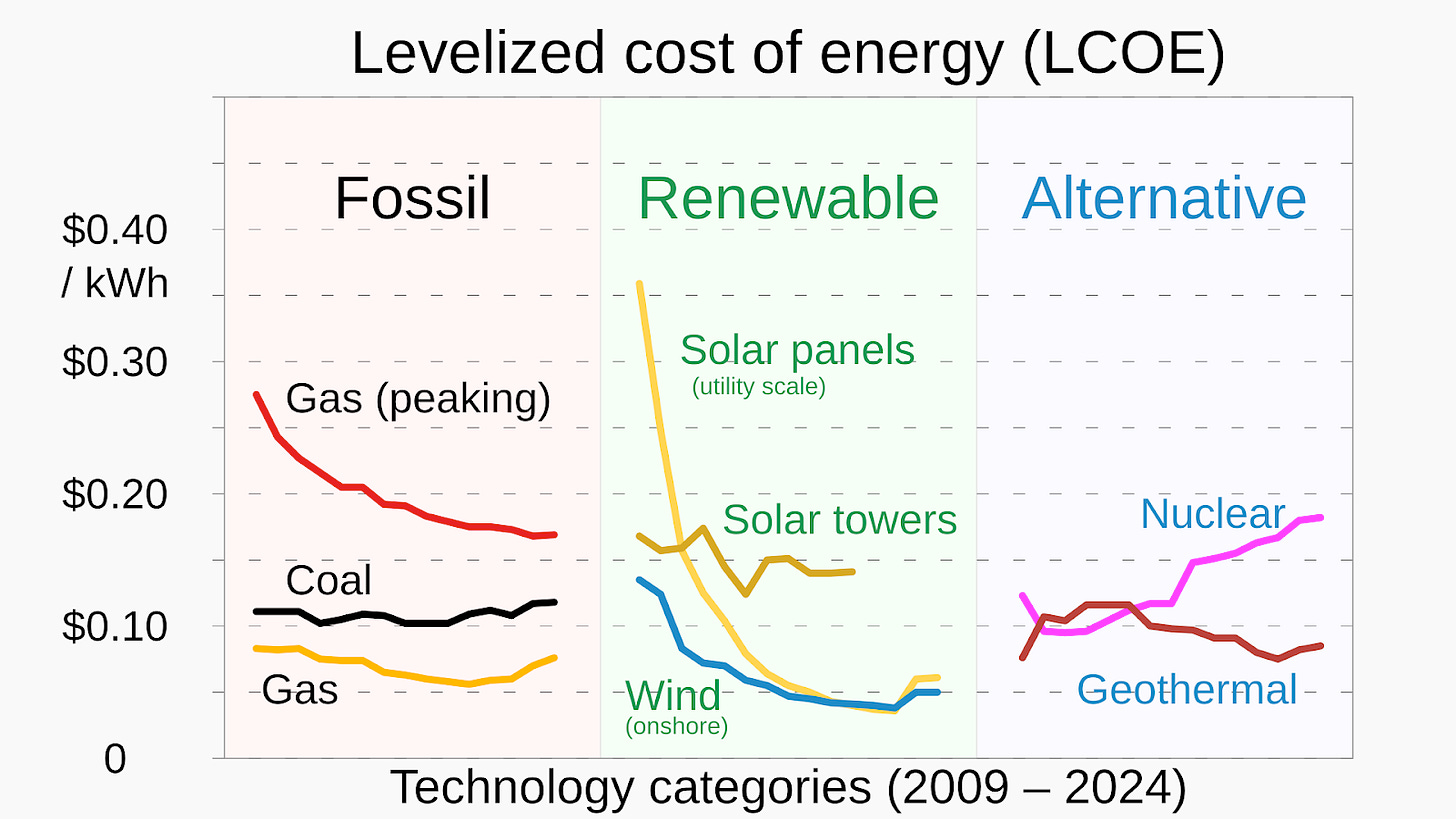
- The Levelized Cost of Energy (LCOE) is a simple way to compare the cost of different energy technologies. It’s the total cost to build and operate an energy source or system divided by the total energy output, measured in dollars per kilowatt-hour ($/kWh). The graph below shows that renewables like wind and solar are now as cheap as fossil fuels (around $0.06/kWh) while traditional gas plants have maintained a steady cost per kWh.
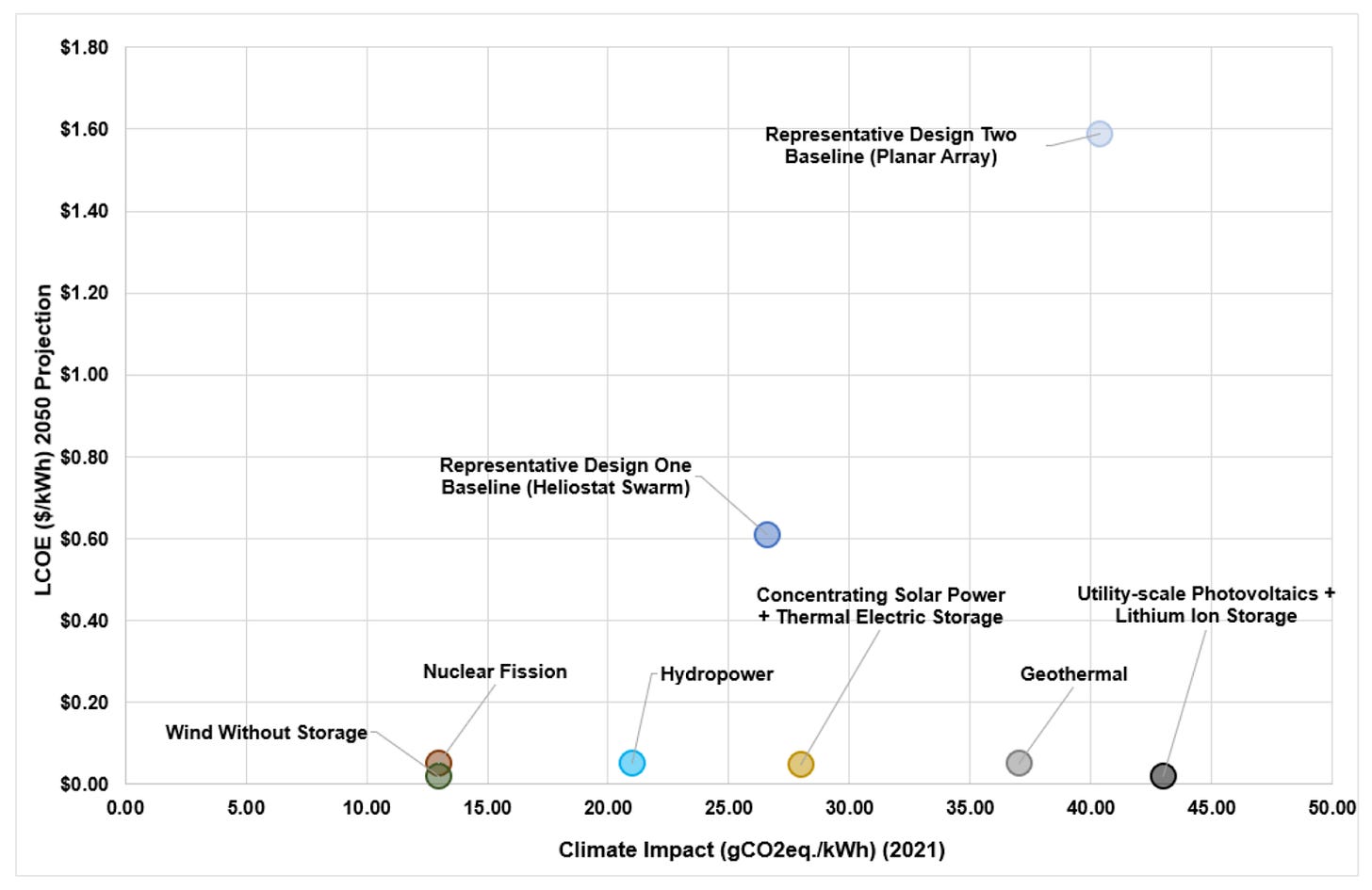
An idea once rooted in science fiction is now gaining serious traction in the commercial sector: space-based solar power (SBSP). NASA first explored the idea in 1968 with a solar power satellite design, followed by a 1973 patent for transmitting energy via microwaves from orbit to Earth. Back then, high launch costs, limited power transmission tech, and weak economic incentives stalled progress. Today, dramatically lower launch costs and demand for clean energy has revived interest in SBSP. Here’s a simplified overview: a geosynchronous PV solar array collects sunlight 24/7, staying aligned with a receiving station on Earth. The DC power generated by the panels is converted into microwaves by a large transmitting antenna and beamed down to a ground-based receiving array. The ground array converts the microwaves back into DC power, which is then transformed into AC power for grid delivery. This study by NASA evaluates the cost and GHG emissions of the two SBSP concepts shown above, estimating that their levelized cost of energy (LCOE) could be 12-80x higher than projected terrestrial energy costs for 2050. Revised assumptions could make SBSP cost-competitive, including lower launch costs ($50M per launch or $500/kg), extended hardware lifetimes of 15 years, and other key factors. Alternative approaches like the one from Reflect Orbital simplify complexity by using a constellation of small satellites in LEO with mylar mirrors (i.e. same material used in thermal blankets) to reflect sunlight to Earth-based solar farms.
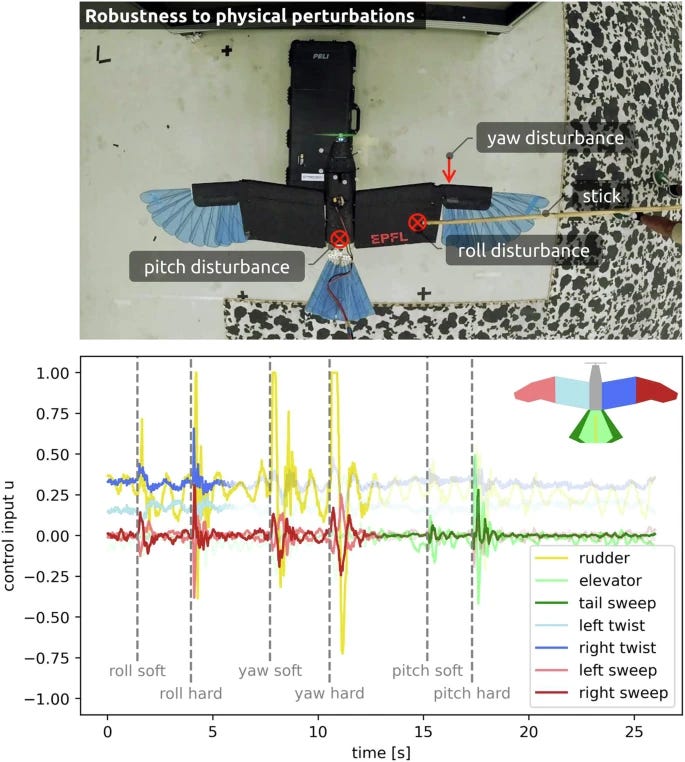
- Avian inspired drones are a class of drones which use morphing wing and tail surfaces to achieve a higher agility and efficiency than a non-morphing fixed wing or quadcopter drone. “Morphing” control surfaces are really no different than the traditional elevator, rudder, and ailerons of an older aircraft—they just have a much higher degree of freedom and range of motion. In this study, researchers were able to use an 8 DOF AID to achieve an 11.5% efficiency gain compared to non-morphing flight, and greatly improved stability during pitch, roll, and yaw perturbations.
- The fully manual start-up and synchronization procedure for a 400kW 60Hz turbine used in hydroelectric power plants. It’s a fascinating process that explains the purpose of test lights in a three-phase generation system. To smoothly join the grid, a generator has to be at exactly the same frequency as the grid. Any frequency difference will appear as a voltage drop at the terminals of the generator, and will turn on the test lights. As the generator approaches 60Hz, the lights blink at the beat frequency between the generator and the grid; when the lights stay off, the frequencies are synchronized and it’s safe to close the switch.
- A stumble down the internet rabbit hole: PCB design races where three engineers compete to design the same board in two hours.
Startup News 🚀
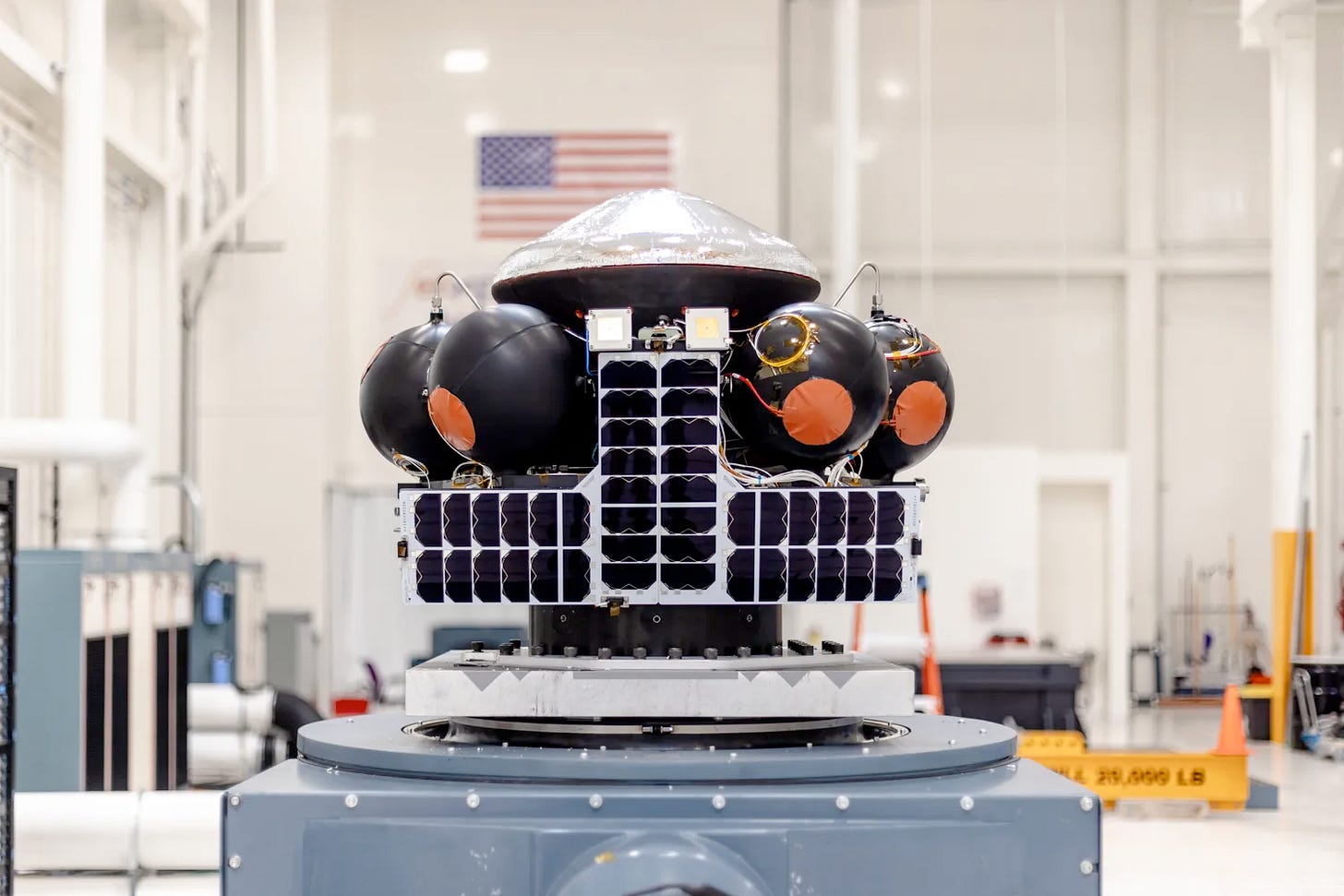
- On the topic of orbital ideas enabled by lower launch costs: Inversion has raised a $44M Series A for space-based cargo delivery. The company is developing a small, autonomous re-entry vehicle (4’ x 8’) that can store cargo in space for up to five years, with the intent of rapid delivery of critical supplies like medicine or military cargo. A test flight is planned to occur in the next few months atop a SpaceX rocket. The round was led by Spark Capital and Adjacent.
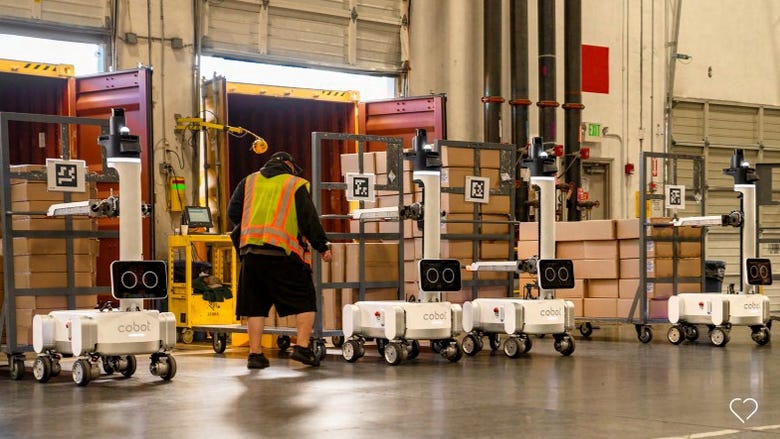
- Collaborative Robotics came out of stealth with the public launch of its robot, Proxie. Unlike traditional industrial robots, collaborative robots (cobots) are designed to operate directly alongside humans in shared environments. The global cobot market is valued at $1.9B and projected to reach $11.8B by 2030.
- Teal Drones, a relatively obscure manufacturer from Utah, won the U.S. Army’s Short Range Reconnaissance (SRR) program contract, beating out venture-backed Skydio which had been selected in the program's first tranche. The contract will provide the military with thousands of small surveillance drones with estimates of total award money around ~$260M.
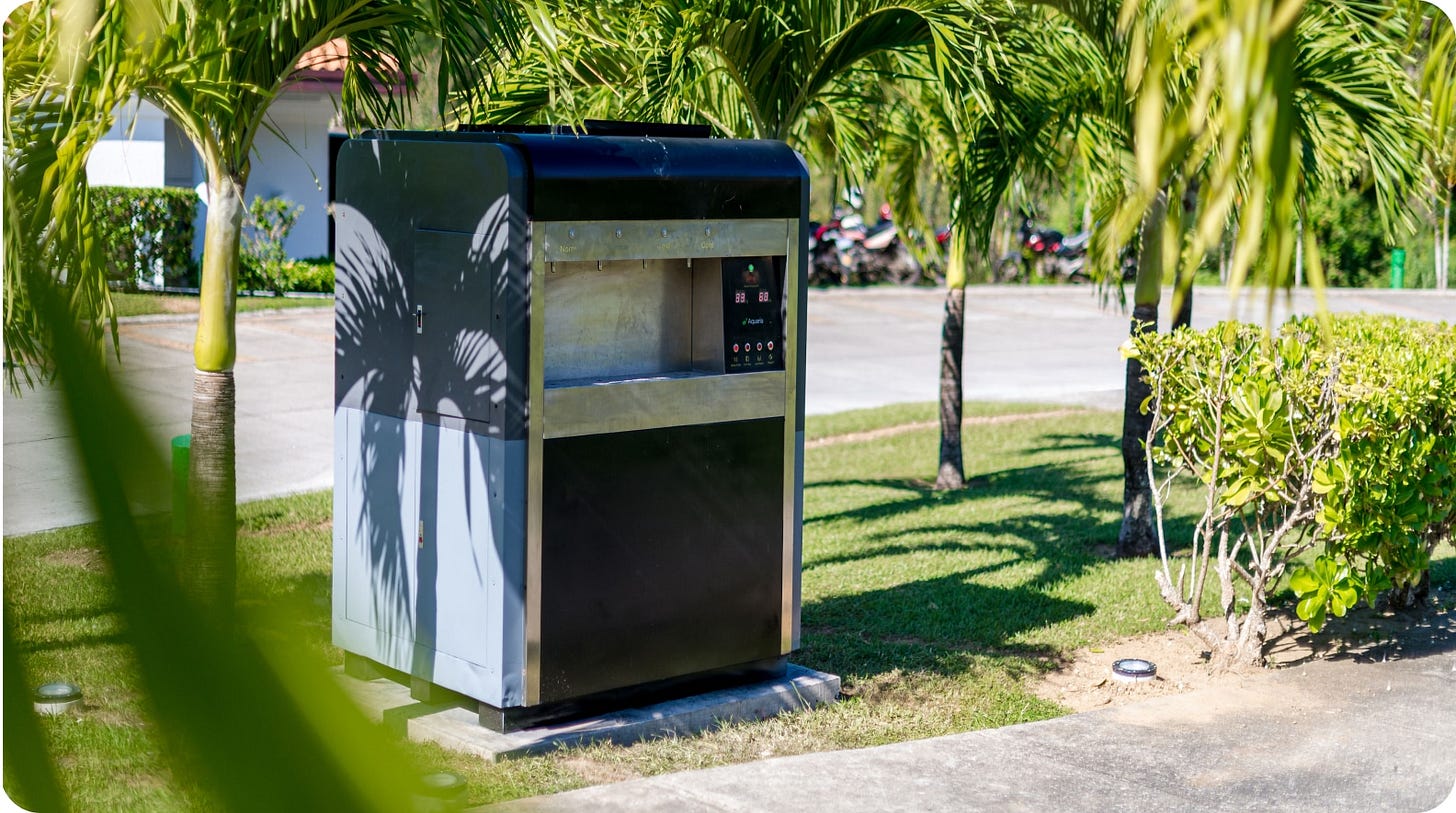
- Aquaria has raised $112M in a combination of equity and project debt to commercialize their large-scale, utility systems for atmospheric water capture. The company currently operates their flagship project in Hawaii where a 1,000 home community relies entirely on atmospheric water provided by the company. Outside of residential partnerships, they plan to scale to sectors that face water access challenges like mining, data centers, and other remote locations. The project debt was secured by Upwell Water with equity funding from Mistletoe.
- Atmospheric water generators (AWGs) extract moisture from air like dehumidifiers, using cooling coils and condensers. Commercial systems can produce over 10,000 liters daily, but efficiency depends on ambient temperature and humidity.
In the news this week:
- Tewke has raised a $3.4M seed round for its smart light switch product featuring onboard sensors to monitor temperature, motion, power, and other factors impacting energy and environmental conditions. The company plans to launch future smart products like a wall socket and boiler controllers to integrate directly into their automation ecosystem.