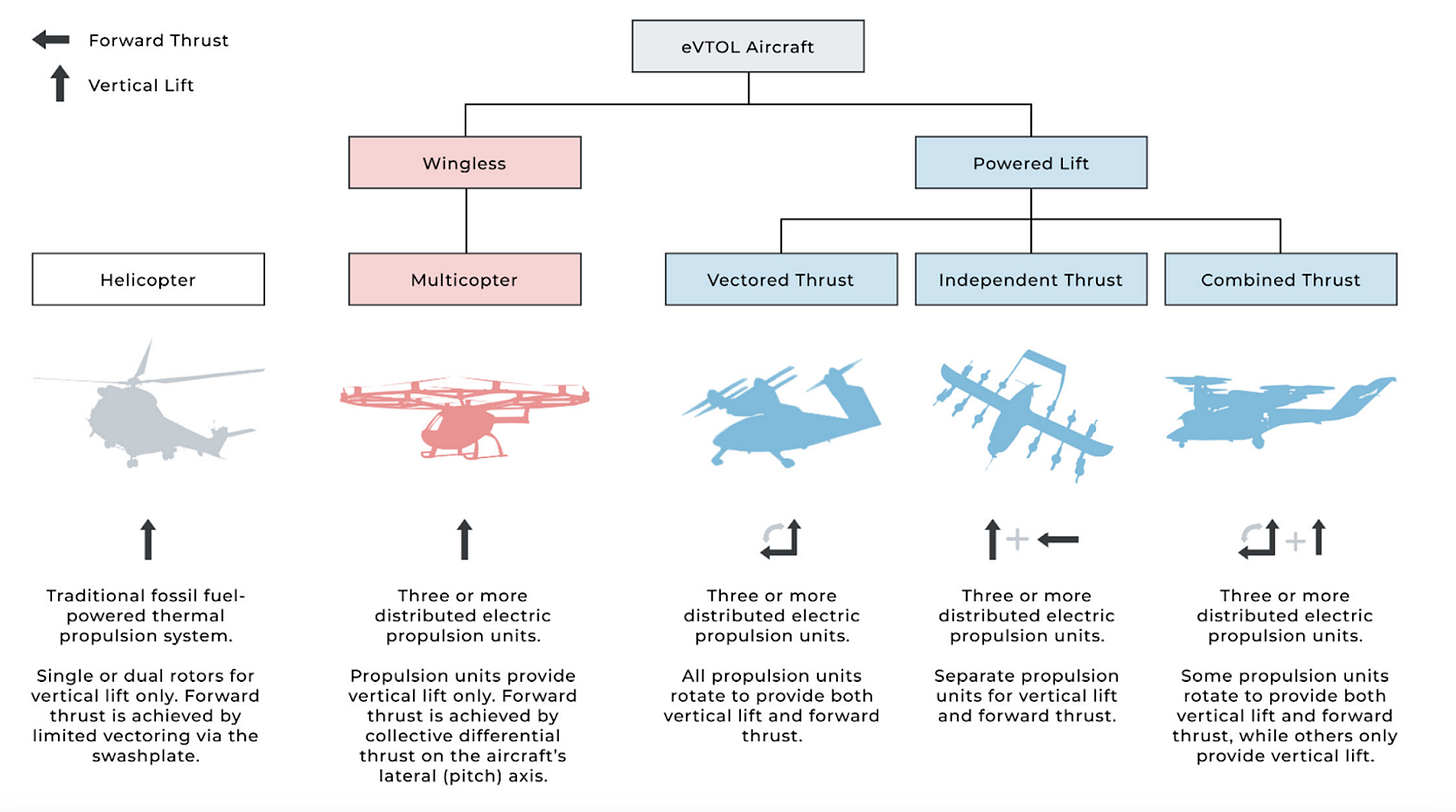
eVTOL aircraft classification by primary propulsion method
A framework on how to judge the viability of any vertical aircraft (eVTOL) startup. The criteria focuses on four key benchmarks: technical feasibility (e.g., does it work with current technology and rely at least partially on wing-borne flight), regulatory path clarity with the FAA (U.S. regulatory body) or EASA (European counterpart). and funding milestones exceeding $1 billion.
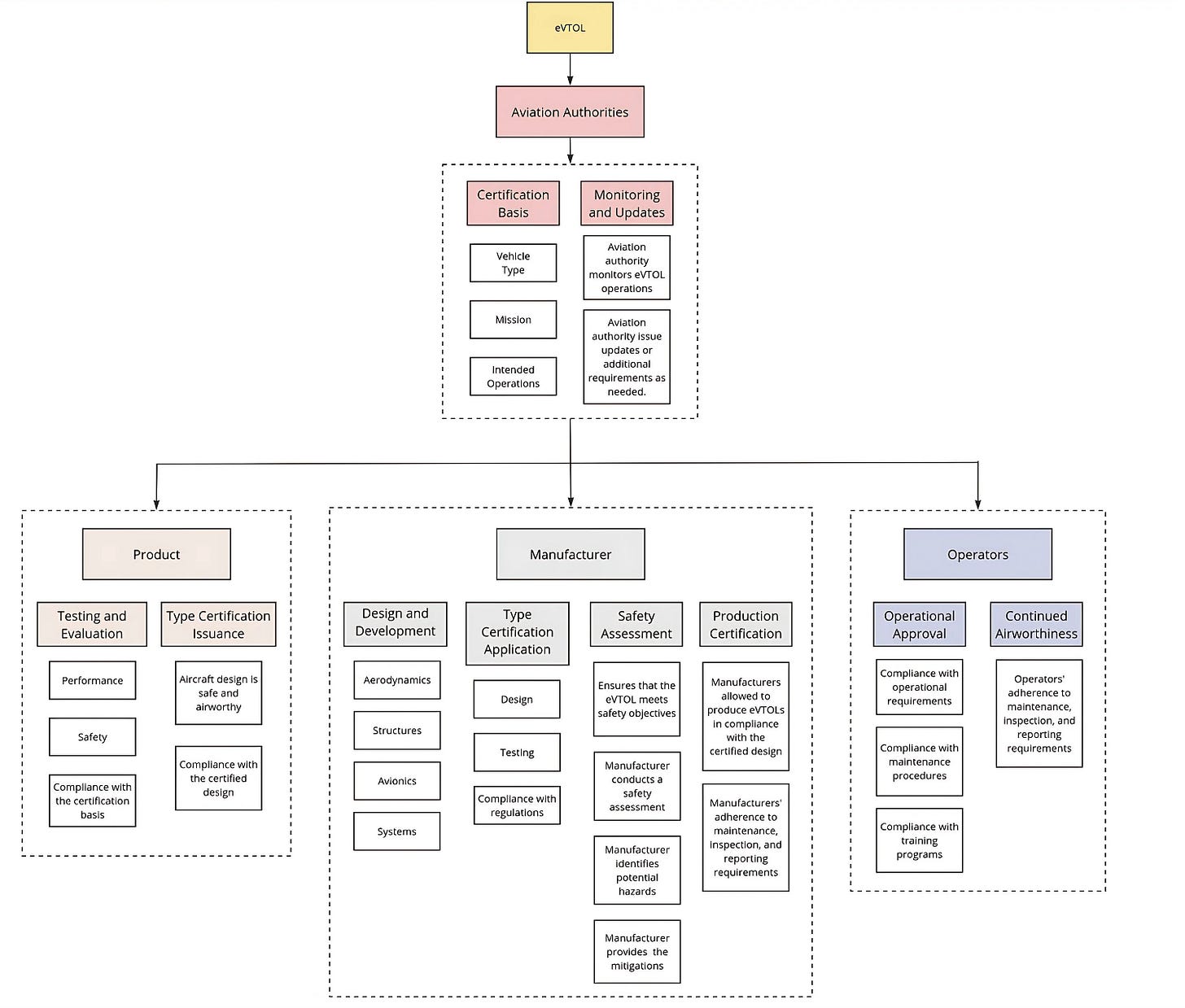
Certification of eVTOL aircraft is a multi-year process at best. For example, Joby Aviation applied for type certification, a formal recognition from the FAA that an aircraft design meets all safety standards in 2018. 6 years later, they’re the only company to have completed the first three of the FAA's five-stage certification process! In an interview with the Head of General Aviation at EASA, he talks about the novelty of eVTOL certification and how regulatory bodies are working directly with manufacturers to write the playbook as they go. To dive deeper into vertical aircraft concept design, this paper is a must-read.
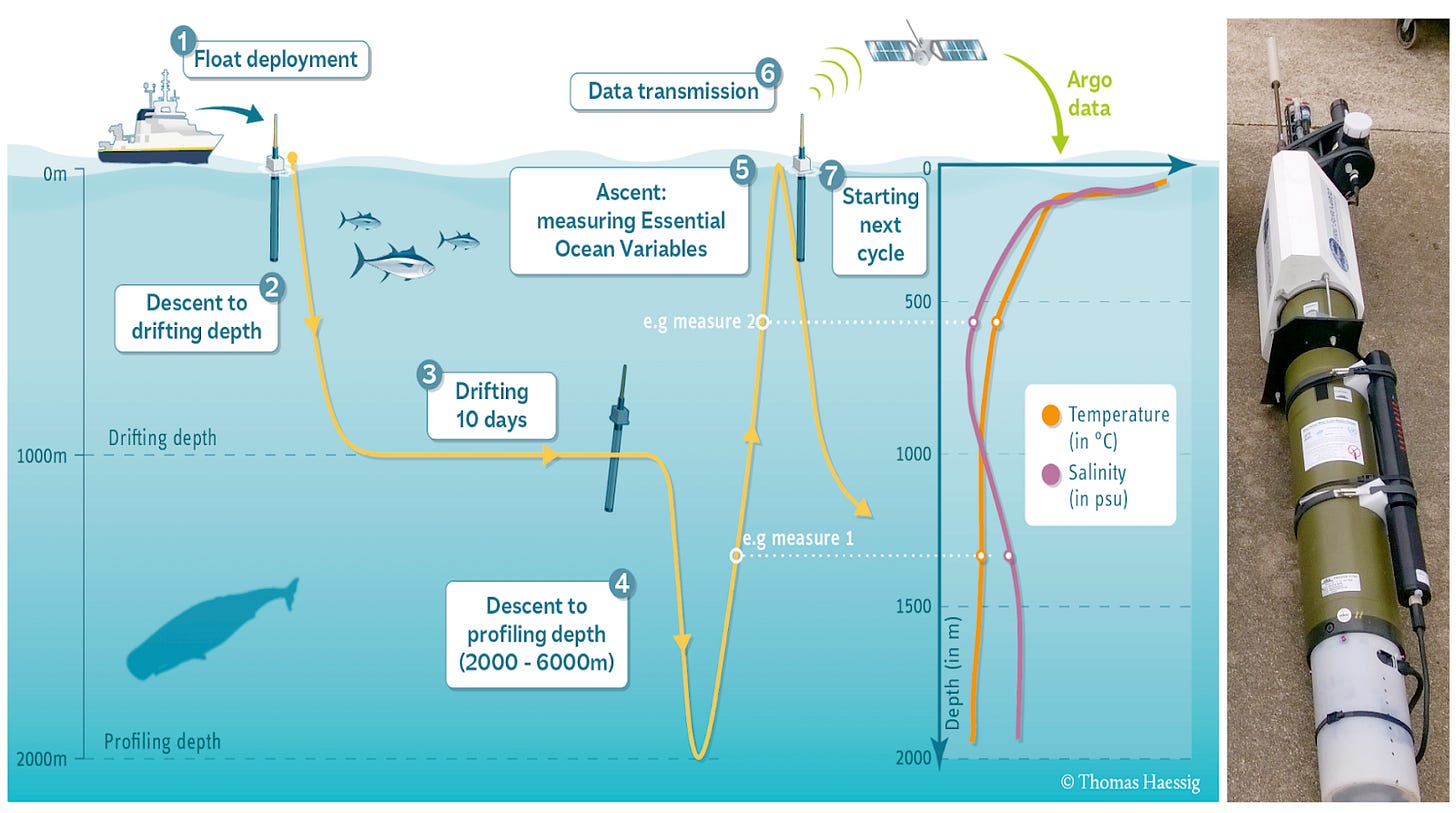
The Biochemical-Argo network is one of the largest networks of floating robots in the world. Each robot is a small platform which can house a variety of sensors (temperature, pH, particulates, etc.) to conduct ocean science. The Argo Program started in 1999 and now runs a global network of almost 4000 robotic floats - these floats operate by adjusting their buoyancy with a hydraulic pump to descend and ascend through the ocean. Each float cycles through phases: it sinks to a designated depth to drift and collect data on temperature, salinity, and pressure, then rises to the surface to transmit the collected data via satellite, and repeats the process
Recently, researchers at Dalhousie University used sensor data from the platforms to estimate the biomass of phytoplankton globally (250 million African Elephants by weight). Over 50% of this biomass would be impossible to observe via satellite!
Standard Argo Float Mission over a 10 Day Cycle (left), Example Argo Float (right)
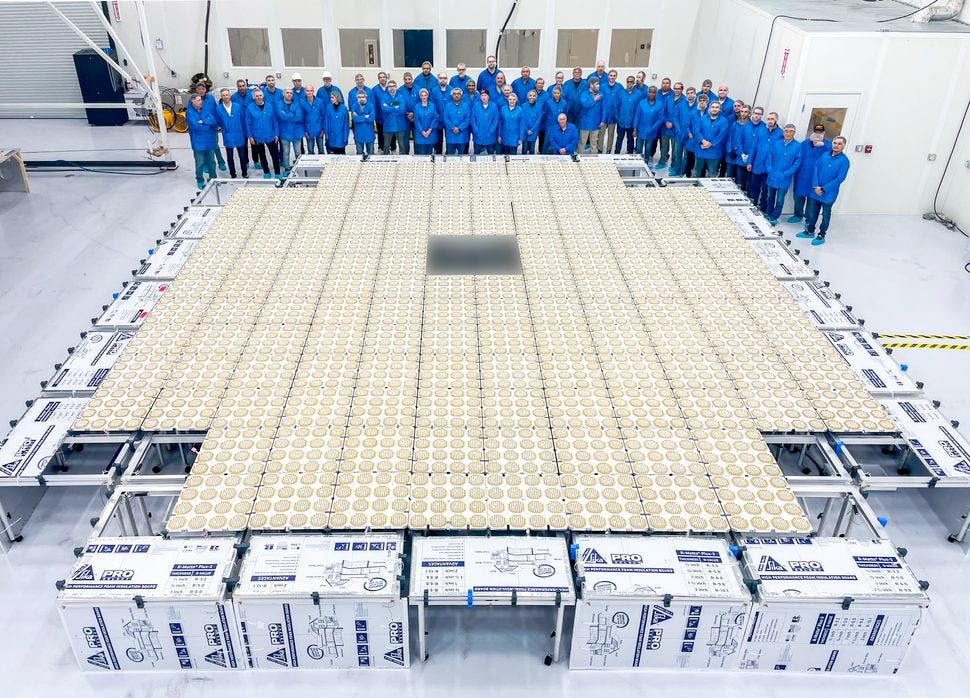
AST SpaceMobile recently finished unfolding the last of five satellites in their BlueWalker array, designed to support the company’s “Blue Bird” space-to-cell service. One of the satellites, BlueWalker 3 is one of the brightest objects in the sky with an apparent magnitude of 0.4 (a measure of brightness as seen from Earth; lower numbers mean brighter). When news of this broke last year, the controversy opened significant dialog between astronomers and the company. The next generation of satellites will feature an anti-reflective coating.
BlueWalker 3 is massive, weighing around 1.5 tons with a 692 sq ft antenna. Deployed in 2022, it’s the largest commercial antenna system ever deployed to low-Earth orbit!
BlueWalker 3 Satellite in a Clean Room
How to build a large nuclear storage facility. This deep-dive into France’s largest geological deposit facility explores some of the design challenges which come with nuclear waste. Safety of groundwater and nearby communities in the event of a release, heating concerns as the waste decays, and even communication of the storage facilities' purpose to future generations are all explored.
Startup News 🚀
On the topic of eVTOL’s: Lilium Aero, a German eVTOL manufacturer, has filed for insolvency after failing to raise additional capital from state and federal funding to keep the company afloat. The company was one of several eVTOL firms that went public through blank check mergers a couple years back, alongside names like Joby Aviation and Archer.
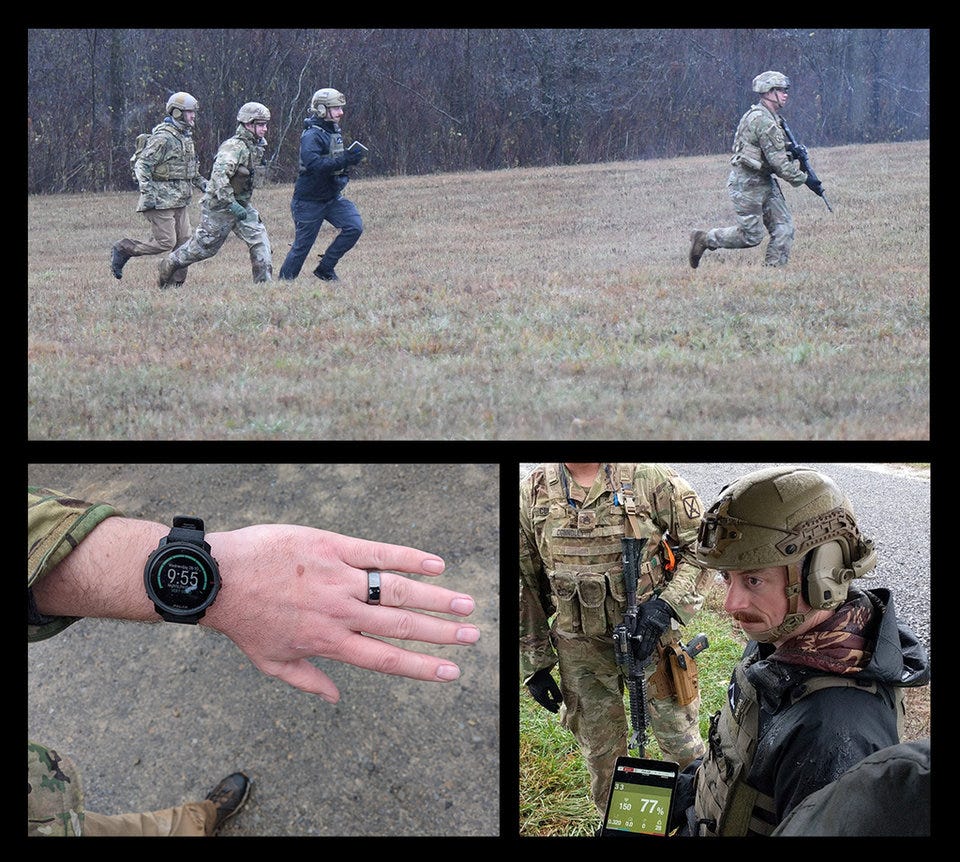
Oura, the smart ring company, has made its third acquisition in two years by acquiring Sparta Science, a platform that collects and analyzes health and performance information. The company has sold 2.5 million rings since launching on Kickstarter in 2015, and was last valued exceeding $2.55 billion! One of their large enterprise clients is the Pentagon, who contracted Oura for $96 million in smart rings to monitor the health and wellness of its personnel.
Copper, a Berkeley-based startup, has been chosen to supply 10,000 induction stoves to the New York Housing Authority as part of a broader initiative to phase out gas stoves in public housing. The rollout begins with a single pilot unit, followed by an initial batch of 100 stoves, and will scale up to the full 10,000 over a seven-year timeline. Copper's induction stoves require only a 120V input unlike most induction ranges/stoves that need a dedicated 220/240V circuit, while delivering 5kWh of storage and up to 10kW peak output.
Beyond Aero has raised a $20M Series A to develop the world’s first hydrogen powered electric aircraft. The company has secured 108 letters of intent totaling $914 million for a 6-8 seat business aircraft with an 800-mile range. The round was led by Giant Ventures and the French sovereign fund Bpifrance.