There were 550,000+ industrial robot installations in factories globally last year, bringing the total global operational stock to 3.9M by the end of 2022.
10% of industrial robot installations were in the Americas, 15% in Europe, and 73% in Asia.
China is the world’s largest market, accounting for over 50% of all installations (290,000+). By robot density (robots per 10,000 workers), China ranks just behind South Korea, Germany, and Japan.
B-rep defines a body’s geometry (points, curves, and surfaces) and topology (vertices, edges, and faces) by connecting these elements to outline boundaries and holes. It’s the industry standard for engineering CAD systems, very accurate and works with parametric curves/surfaces, but error-prone and difficult for computers to process. Common file formats include STEP, X_T (Parasolid), and IGES (an older, more fragile format).
Mesh data represents geometry as a collection of triangles and is commonly used in graphics applications or for outputs from 3D scanning. CAD systems don’t work well with mesh data as it’s hard to edit accurately. Common file formats include STL and 3MF (3D Manufacturing Format), a modern alternative that supports additional data like units, materials, and color.
A rabbit represented as solid mesh data
The Catalog of Catastrophe is a comprehensive record of projects from the past 20 years that faced major issues: some were canceled over quality or delivery issues, others saw their budgets or timelines spiral out of control, and a couple launched only to disrupt services for the public (i.e Boeing 737 Max rollout). One of the costliest issues in recent history happened when Airbus used two versions of CATIA (versions 4 and 5) at different design sites. Dassault had changed the geometry kernel from V4 to V5, which led to inconsistencies in how bend radii were calculated for wiring. Wires that were slightly too short, compounded over 100,000 wires,cost Airbus an estimated $6.1 billion in production delays!
Airbus A380 Diagram
Tesla released a new family of low voltage automotive connectors which can handle 90% of signal and power applications with just six standard connectors. This will expand upon the 48V architecture used in Cybertruck, replacing the 12V automotive standard. Generally speaking, 48V is the highest voltage permitted in low-voltage systems. NFPA 70E defines shock hazard as 50V.
Our take: Tesla's low voltage connector standard (LVCS) mirrors the strategy used for its charging connector, now called the North American Charging Standard (NACS). Originally developed as proprietary tech, Tesla opened NACS specifications to competitors in 2022 leading to adoption by major automakers like Ford, GM, Rivian, and others.
Startup News 🚀
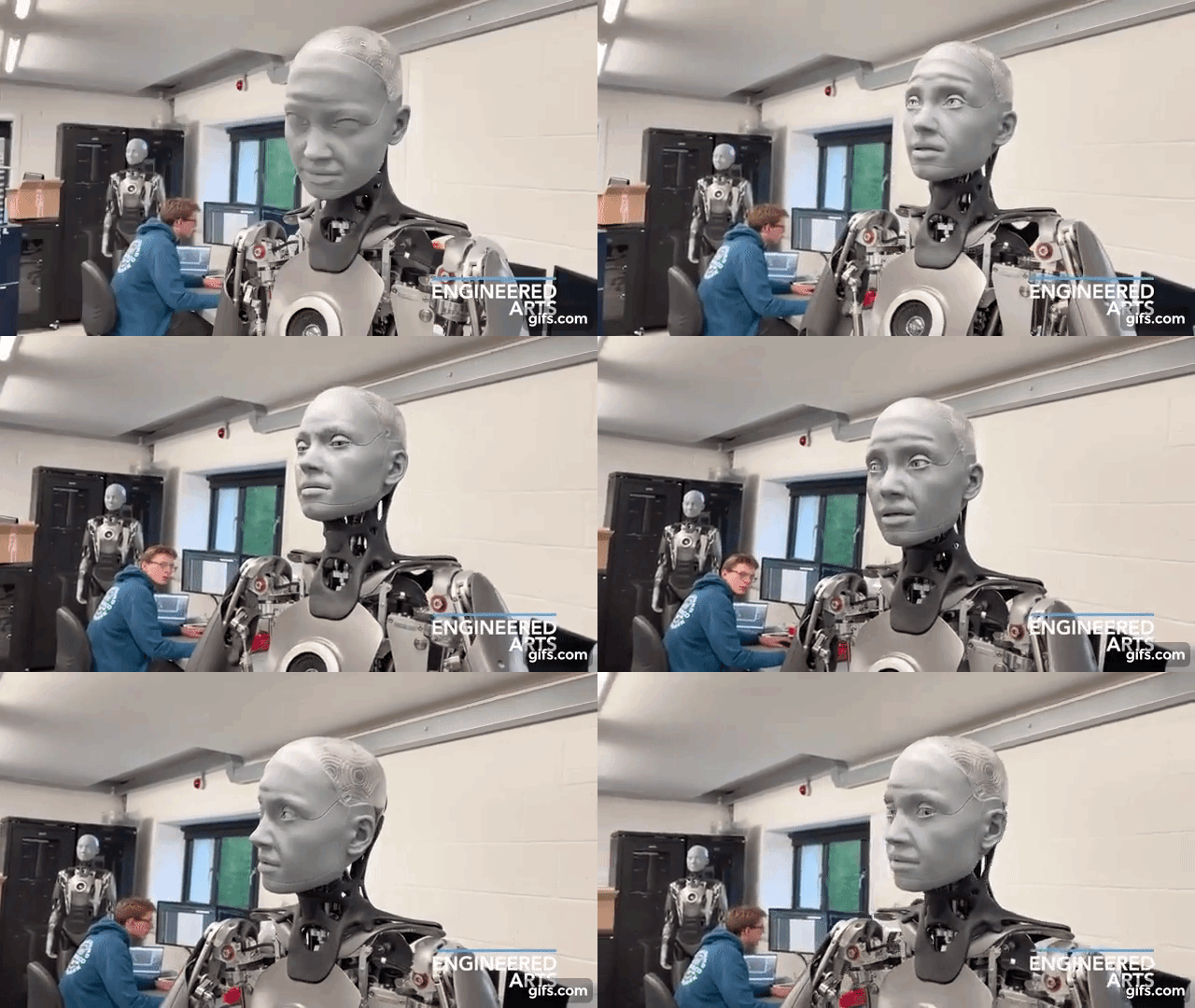
Engineered Arts has raised a $10M Series A Round at a $100M pre-money valuation. Compared to other humanoid robotic companies, Engineered Arts has a long history: the company was founded two decades ago, and builds robots primarily for mixed media installations. The company currently designs and manufactures humanoid robots for entertainment purposes, and has installed 100+ robots at locations like science museums, shows, and exhibitions.
Notable rounds in the industrial robotics realm:
Nimble has raised a $106M Series C round to scale their general purpose fulfillment robotic system. The company develops warehouse robotics capable of core functions like storage & retrieval, picking, packing, and sorting. The round was led by FedEx and has also agreed to enter a commercial agreement to use Nimble’s technology in their fulfillment services.
Carbon Robotics raised a $70M Series D round to continue development of their ag tech. robotic system and expand manufacturing capabilities. Carbon’s flagship product is the “LaserWeeder”, a machine that attaches to the back of a trailer and uses a combination of computer vision & 150W CO2 lasers to target and eliminate weeds. The round is notable in the ag tech. space as VC funding has dropped by 60% since 2021. The round was led by BOND Capital.
Terralayr has raised $67M in new funding, along with an additional $16 million in debt, to build a large-scale distributed battery storage network, aiming to make stored electricity as accessible as AWS has made cloud storage. Currently, the company operates a consumer-to-grid model, trading energy from battery pack owners based on fluctuating local electricity rates.