Highlights this week: 🦾 Intel spending $20B, 🦆 the physics behind duck formations, 💵 DoD spending by state, and …🦨 cringe ferrets
most-clicked link: Apple’s Long Journey to the M1 Pro Chip
Intel entering the foundry business — can it succeed?
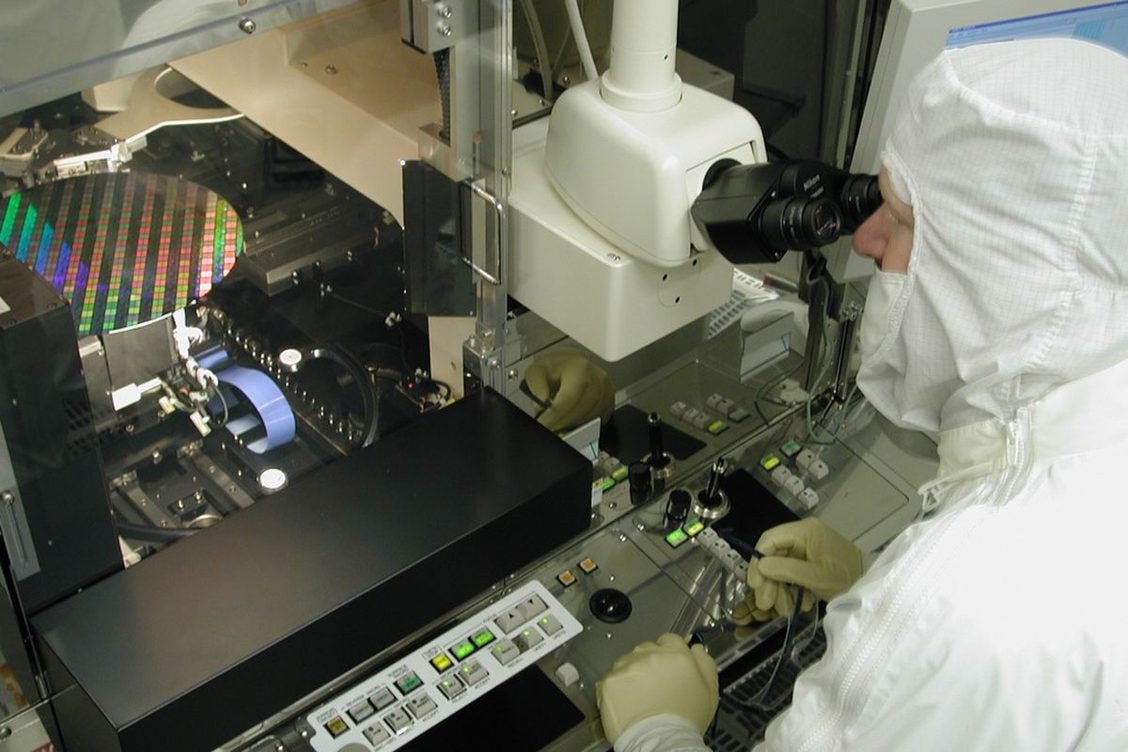
What’s happening: Intel is getting into the foundry business, spending $20B to build two new fabs in Arizona (to start). CEO Pat Gelsinger says that Intel will open the doors of their fab “wide for the community at large to serve the foundry needs of customers—many of them US companies that are dependent on solely having foreign supply sources today”. Apple, Google, Tesla, and other companies are moving away from Intel’s standardized chips toward their own customized designs. The new Intel Foundry Services is a standalone business that will report directly to Gelsinger, and has already announced Qualcomm and AWS as customers.
Some background: Semiconductor foundries are historically expensive and difficult businesses to operate — especially when operated by a traditional IDM like Intel (integrated device manufacturer — vertically integrated semiconductor company that designs, manufactures, and packages their own chips). Intel will be spending $25B-$28B in capital expenditure alone, plus another $15B in R&D each year. In just the last 8 months since Pat Gelsinger joined Intel, they have hired an additional 6,000 engineers. This comes alongside Samsung’s $151B investment plans and TSMC’s $100B pledge for the next three years alone.
Details:
- 77% of foundry revenue in 2020 was from wafers manufactured in Taiwan or China.
- The total addressable market (“TAM”) for the overall semiconductor device market was $466 billion in 2020, while the TAM for the foundry market, excluding memory, was $74 billion (according to Gartner).
- Intel’s success will depend partly on the US Government. TSMC enjoys lower operating costs largely due to support from the Taiwanese government. Building and operating a fab in the US costs 30 percent more than in Asia, largely due to government subsidies.
- Earlier this year, Intel was in talks to acquire GlobalFoundries, a pure-play foundry with a large US presence, for ~$30B. Those plans have since been cancelled, with GlobalFoundries going public next week at a similar valuation.
Dive Deeper:
- Thorough explanation of the fabrication processes for different technology nodes (14nm, 7nm, etc.)
- Great analysis of Intel’s future investment plans
Government: DoD releases defense spending by state 🇺🇸💵
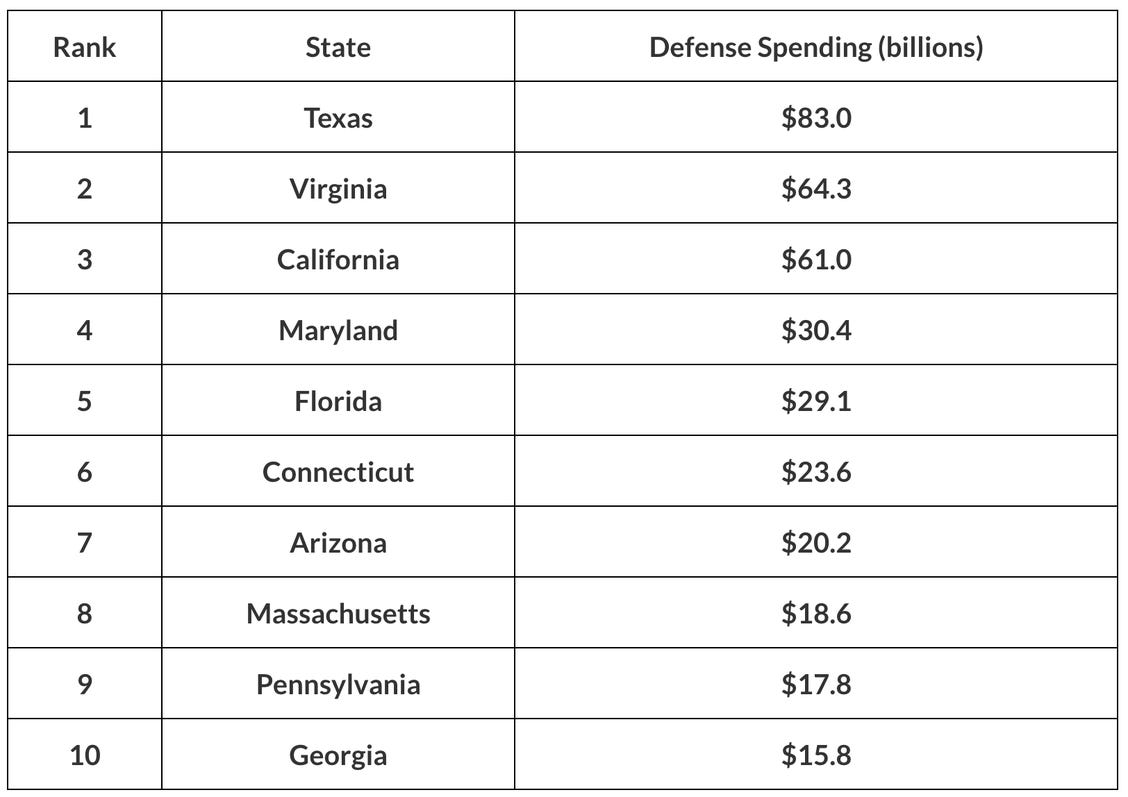
DoD contract obligations and payroll spending totaled $593.9 billion (2.8 percent of the country’s GDP). Lockhheed Martin was the top recipient, earning nearly $73B. If the total spending were divided across every U.S. resident, it would amount to $1,803 per U.S. citizen. Of those funds, $439.4 billion (74 percent) were spent on contracts for products and services, while the remaining $154.6 billion (26 percent) paid the salaries of DOD personnel.
Newcomers are also winning big contracts, with unicorn private defense startup Anduril recently winning a $99M DoD contract to supply counter-UAS capabilities.
Dive Deeper: Here’s the full report, state-by-state, with instructions on how to read it
Interesting Links 🔗:
- Andrew Waterman’s 2016 PhD dissertation at Berkeley outlining the RISC-V instruction set architecture, just after the founding of SiFive. Section 2 is a great primer on ISA’s in general, and the motivation for creating a new one.
- A vintage russian datasheet of a 5-channel MOSFET commutator.
- Great tweet listing interesting startup ideas in the satellite imagery space (like crop insurance fraud finder).
- One technique to reduce energy consumption is to reduce the operating voltage of the system. Why utilizing near-threshold-voltage is good for hearables.
- A really interesting dive into capacitive accelerometers (compared to the piezoresistive sensors used in many other accelerometers).
- An engineering explanation to why ducks swim in formation, published by the Journal of Fluid Mechanics.
- Piloting an aircraft with just a few hours of training and an iPad? Great report from a NYTimes reporter who tried out SkyRyse’s FlightOS software in a chopper.
Startup News 🚀💰:
- Via Separations, a startup focused on decarbonizing manufacturing, raises a $38M series B led by NGP ETP, along with The Engine, Embark Ventures, and others.
- GlobalFoundries, a semiconductor manufacturing and design company, is set to go public this week — raising $2.4B at a $24.6B market cap.
- SailDrone, an uncrewed surface vehicle startup, raises a $100M series C led by BOND, along with XN, Emerson Collective, Lux Capital, Social Capital, and others.
- Rigetti Computing, a quantum hardware startup, set to go public via $1.5B SPAC deal led by ex-zillow CEO Spencer Rascoff.
- Intelligent Implants, a Cork-based med-tech startup, raises $8.7M from SOSV, EIC accelerator, and more.
- Flock Freight, a digital freight logistics startup, raises a $215M series D led by Softbank Vision Fund 2, along with Susquehanna Private Equity Investments, LLLP, SignalFire, GV, and others.
- Bild, a cloud-based hardware collaboration startup, raises a $3M seed led by Tola Capital, along with Lux Capital, Shasta Ventures, Counterview Capital, Techstars, and others.
- Vertical Oceans, a startup sustainably growing shrimp in huge aqua-towers, raised a $3.5M seed led by Khosla Ventures, along with SOSV and others.
- Sono Motors, a German solar-powered vehicle startup, has filed for an IPO with over 14,000 reservations for their to-be-produced vehicle.
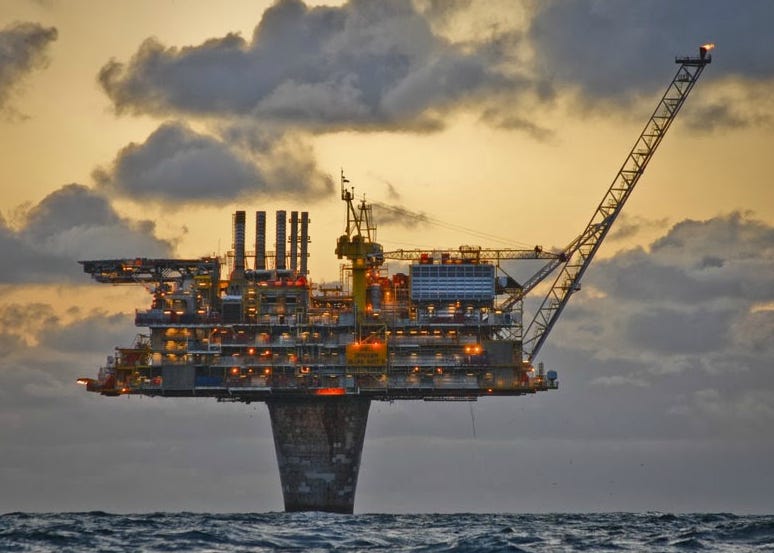
One Interesting Picture 📸: Draugen oil platform, Norwegian Sea
One Interesting Tweet 🐦: Cringe Ferrets 😬