

Topics worth your time: why constrained engineering problems tend to converge on the same shapes, Boom’s $800K amateur Mach 1 prize for RC planes, 1X’s new tendon-driven NEO hand, and an ultrasound-based approach to silent speech.
Interesting Design Challenge: The Local Design Space of High-Speed RC Planes
There are not many ways to get practical experience with aerodynamic systems without working for an aerospace company. Even in industry, the work is often divided into subdisciplines and practitioners see only a portion of the development cycle. RC airplanes are one of the few ways to encounter the whole system at once. They turn aerodynamic theory into something that can be understood through the construction of a real flying machine.
At the far edge of the hobby, there is a simple pleasure in making a small machine move faster than seems reasonable. (See, for example, this turbine-powered RC jet traveling at 451 mph).
That’s the context for a new extremely fast blended-delta aircraft design from a Georgia Tech student, which recently went viral and prompted a discussion about resemblance and influence in high-performance designs.
Since February, I've designed and built the world's fastest RC airplane in my college dorm, and that’s not clickbait. Reaper has a 5kg carbon-fiber frame, 250N turbojet, and flies at 500mph. New to X and will be going through the whole build here in the coming days. <span class="tweet-fake-link">#aerospace</span>
Tomas Salvo (@tomas_salvo22), view the post
Tomas’s aircraft is a 5 kg carbon-fiber jet built around a 250 N turbine (yes, you can buy miniature jet engines from suppliers like JetCat and Sierra Turbines), with a stated goal of surpassing 500 mph. The immediate comparison was to Niels Herbrich’s Inferno, which set the official record for a jet-powered RC plane at 465.5 mph in 2017.
At a glance, the resemblance is obvious: both are small, highly swept, delta-like aircraft built around a single turbine and optimized for speed. But Herbrich’s designs are not available to copy; beyond observing their functionality, the details are not public. The aircraft happens to occupy the same local design space while remaining a distinct design, where small changes to the airfoil, inlet geometry, control tuning, or surface finish can materially change behavior.
Perhaps the better takeaway from this is that heavily constrained design problems often converge to very similar results. Thus, it is unsurprising that in design problems such as maximum drone speed, the best performing configurations often look identical to one another.
For more resources, check out this primer on RC model jet engines, adaptations of the same principles used for jetpack designs, and a great presentation on dynamic soaring - the unpowered side of RC flight.
As we’re writing this, Boom announced an $800,000 prize for the first amateur-built RC aircraft to break Mach 1. More on the contest here.
More From Around The Web
- A method for silent speech by holding an ultrasound probe under the chin. Before becoming a popular voice dictation app, Wispr Flow spent three years building an earpiece for the same problem, then decided the hardware was premature for consumer use.
- Taking an inside look at Valar Atomics.
- A simulation of strain-wave gears - making a gearbox flexible for zero backlash.
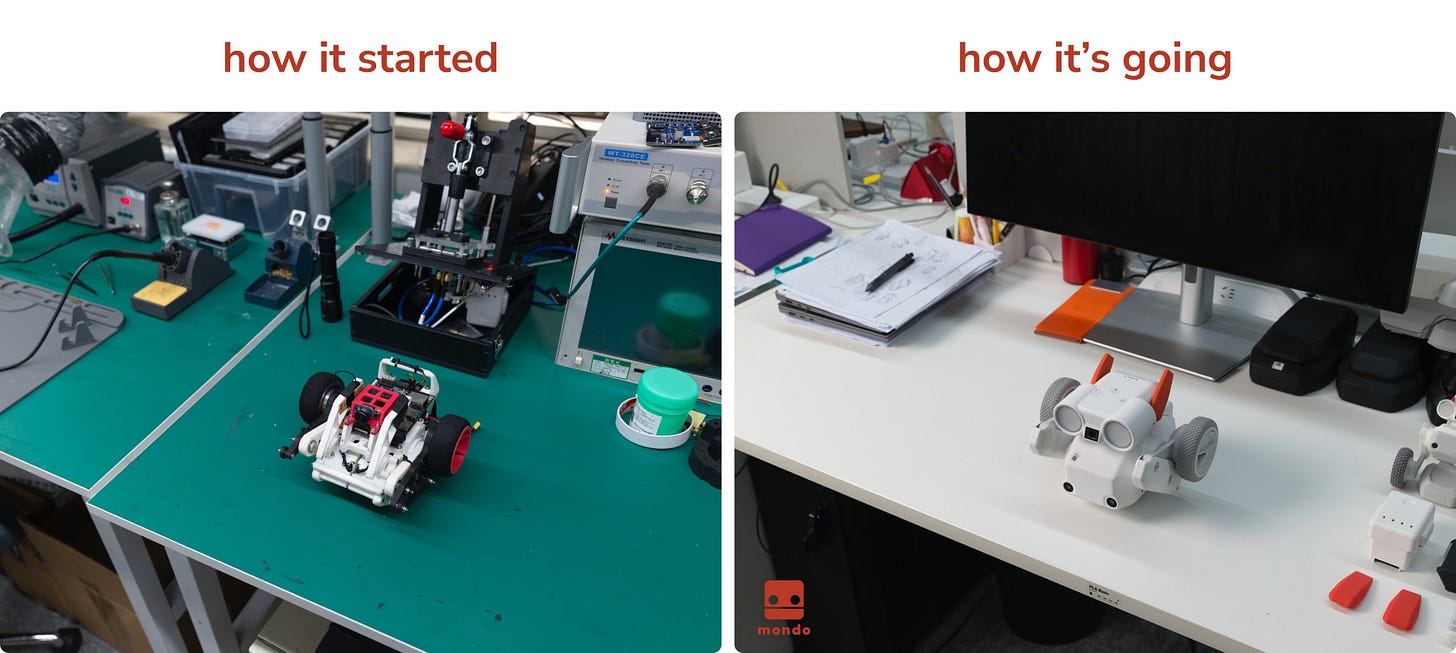
- Beni by Mondo Robotics is a new camera robot built by a former Tesla Optimus engineer. The Kickstarter campaign has already raised ~$1.5M against a $50K goal.
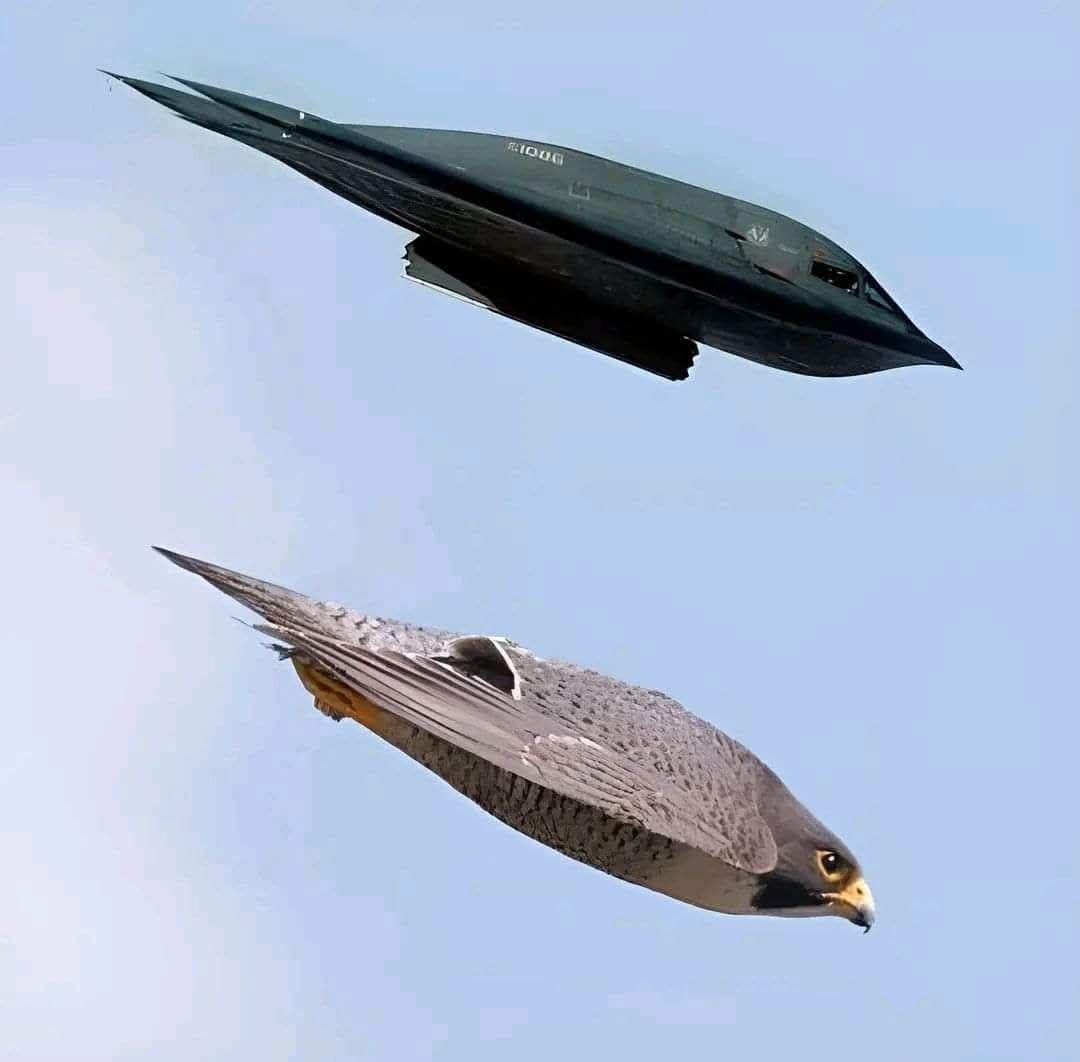
Interesting Photo: The B-2 Bomber and Peregrine Falcon
On the topic of convergent designs — similarities between a peregrine falcon and the B-2 bomber. Borges’s On Exactitude in Science and Farnam Street’s The Map Is Not the Territory offer a different angle on what it means to “copy” information.
Manufacturing & Startup News
- Tesla decommissioned the original Model S and Model X assembly line at Fremont a few weeks after ending production, clearing one of its oldest vehicle lines for Optimus.
- 1X unveiled a new 25-DOF tendon-driven hand for NEO; the images and demos are a good look at the mechanical complexity behind tendon-driven hand architectures.
- SambaNova raised $1B in Series F funding at an $11B valuation to scale its AI inference hardware business, betting that large enterprises will want private infrastructure for running large models.
- Amity Robotics raised $7M in seed funding to scale its AI concierge kiosks for malls and hotels.