

Topics worth your time this issue: new trends in robot data factories and 100-unit deployments, ASMR machining and the creative use of a lathe, the deterministic negotiation happening inside every USB-C connection, and a new entrant bringing on-demand ordering to composites.
Interesting Presentation: Building a 100 Robot Data Factory
An emergent trend in modern robotics is the premise of a data factory. We usually think of factories as places that turn raw materials into finished goods — think stamped steel into cars, resin into molded parts, silicon into chips. In robotics, a new version of this idea is taking shape, one where the input is robot operation itself and the finished product is training data.
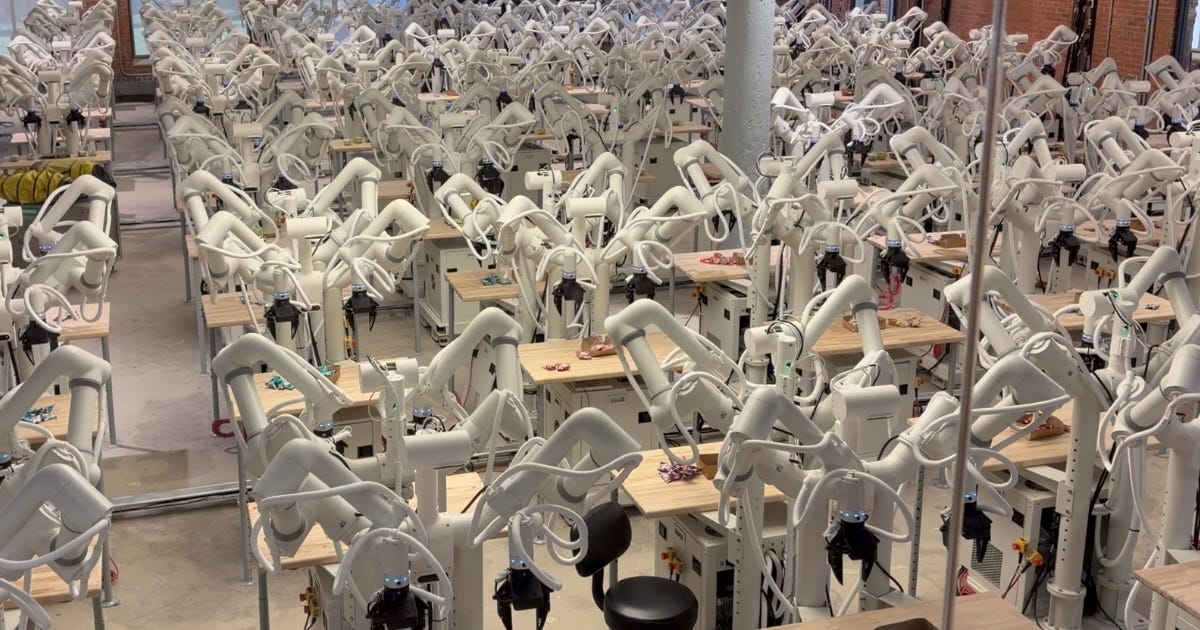
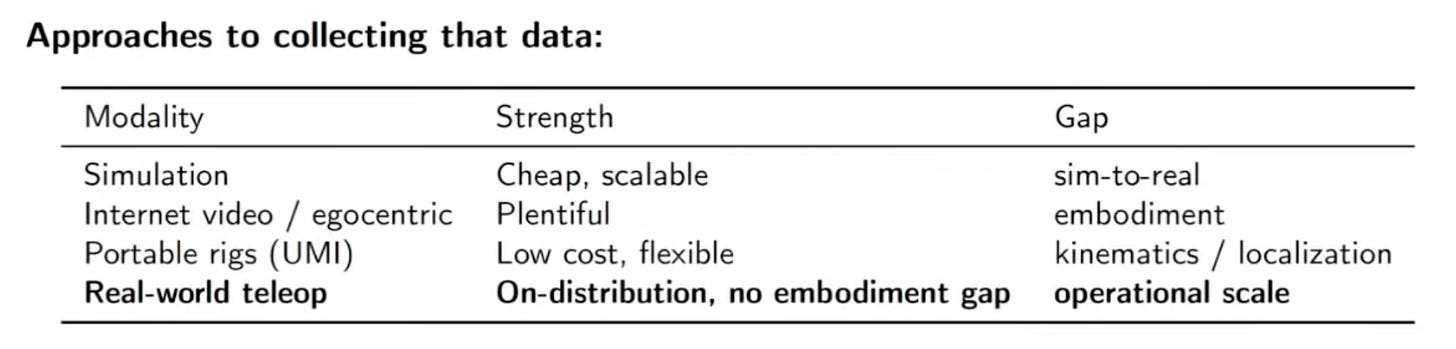
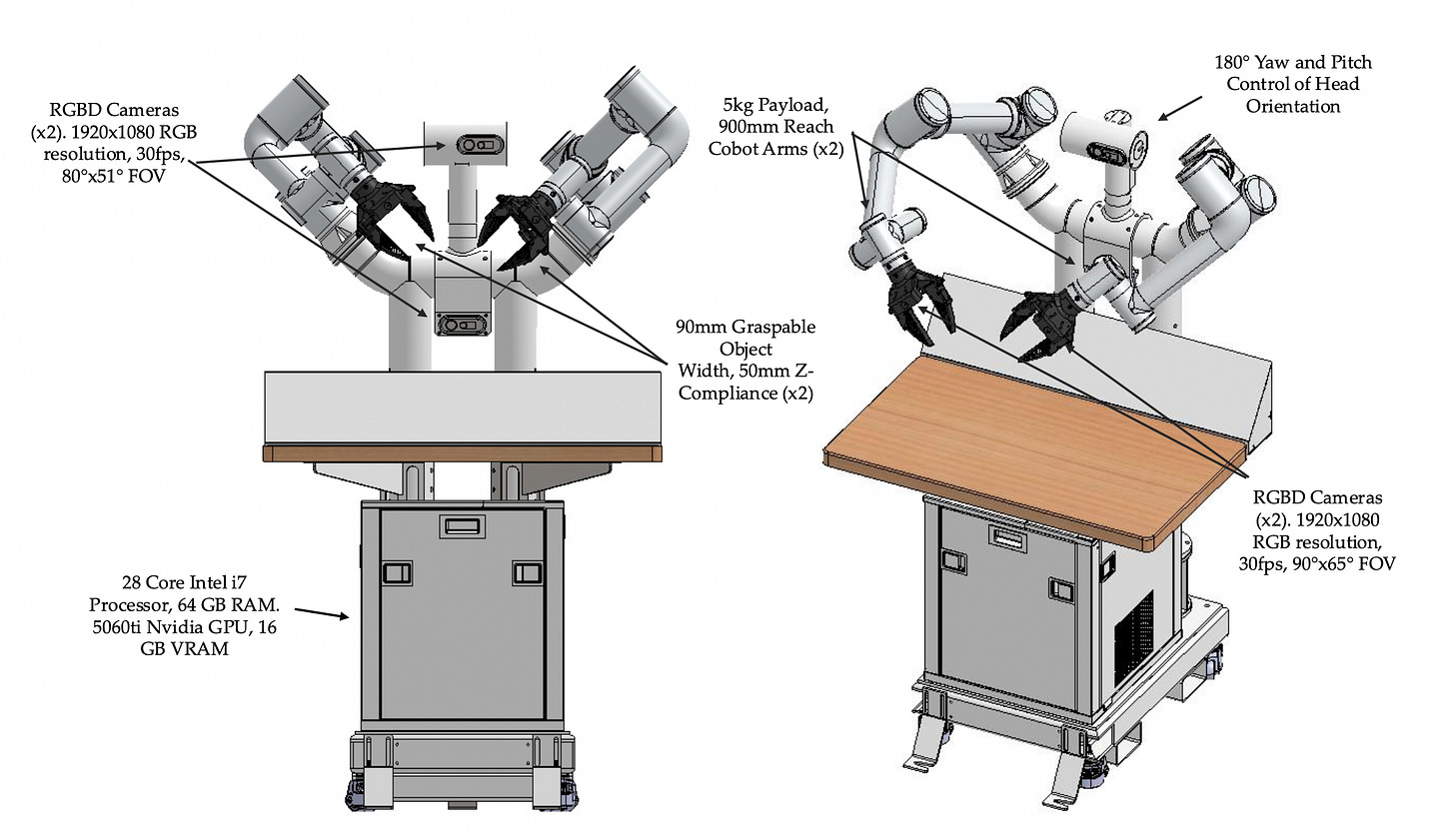
Tutor Intelligence’s Data Factory 1 is a 100 robot farm of bimanual manipulators that the company says collects up to 1,000 hours of demonstration data per day. Each robot has two 6-DoF arms, stereo RGBD cameras on each wrist, and a fleet of remote operators to supervise in real time (one operator per robot, or 1:N) and intervene when a robot gets stuck.
The core bet echoes a familiar lesson from hardware development: you learn best by building and testing things in the real world, not by perfecting them in simulation or on static datasets. The founders framed it as sending robots to kindergarten where operators demonstrate tasks, the robots attempt them autonomously, and when they fail, a human steps in with a correction that gets folded back into the model. The more robots deployed, the faster edge cases surface, and the faster the policies improve.
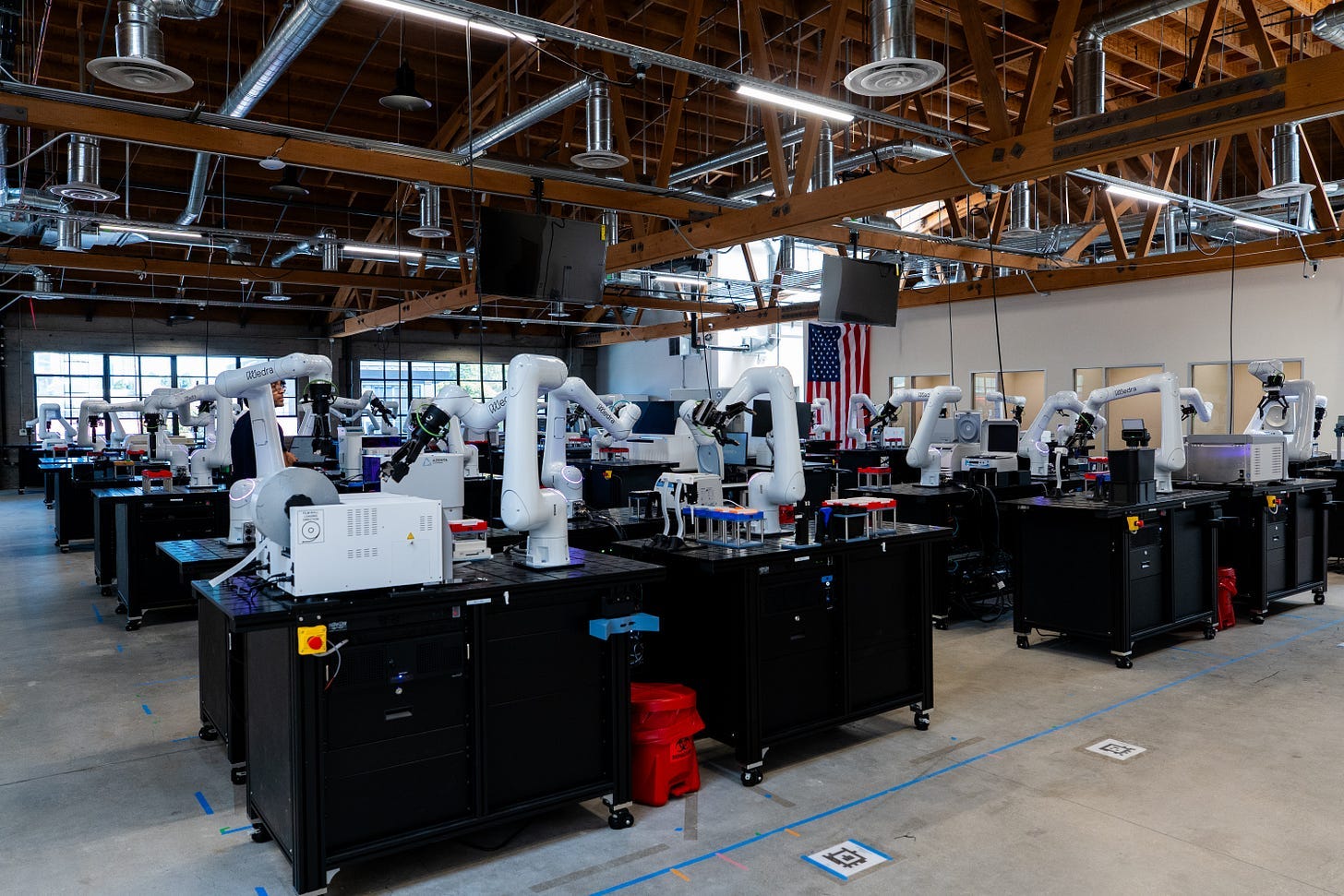
A related but distinct idea is emerging in life sciences with Medra also operating a fleet of one hundred robots in a dedicated facility. While Tutor’s factory uses robotic arms to produce training data as its finished product, Medra’s approach is to give models a body to work with for wet lab experiments. Similar approaches: one factory outputs data, the other outputs experiments.
Interesting Video: Meditative Machining
Machining ASMR, and a man using a lathe with the confidence of someone who knows exactly which rules are optional.
Interesting Chart: USB-C Power Delivery Basics
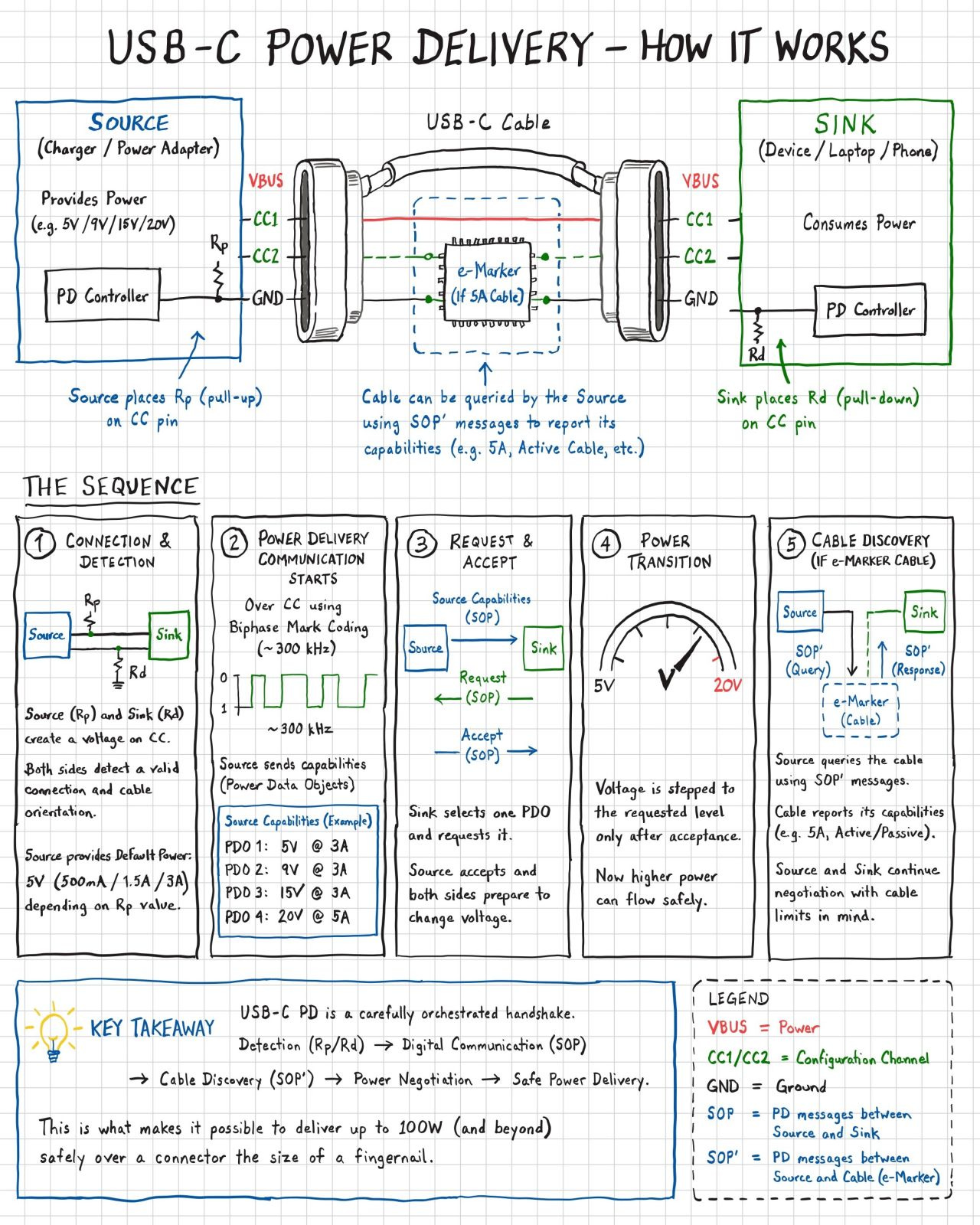
USB-C power delivery is a deterministic sequence: two configuration channel pins (CC1 and CC2) detect cable orientation, establish source and sink roles, and bring the connection up safely at 5V. From there, USB PD negotiates higher voltages over the active CC line, and in higher-current cases, also checks the cable’s own rating before allowing more power through.
This is also in part how you end up with a “universal” serial port - the port itself is universal, but what it agrees to do is very much not.
Manufacturing & Startup News
- Layup Parts raised $42M in Series A funding to build a faster quoting and manufacturing workflow for custom carbon fiber and fiberglass parts.
- Terra AI raised $20M in Series A funding to build subsurface modeling software for mining, geothermal, and carbon storage.
- Volition was acquired by Siemens Digital Industries Software, expanding Supplyframe beyond electronics search and sourcing into mechanical and industrial parts.
- Volund Manufacturing raised $12M in seed funding to build small gas turbine engines for drones and low-cost missiles.