Project Highlight: HWSphere 🔦
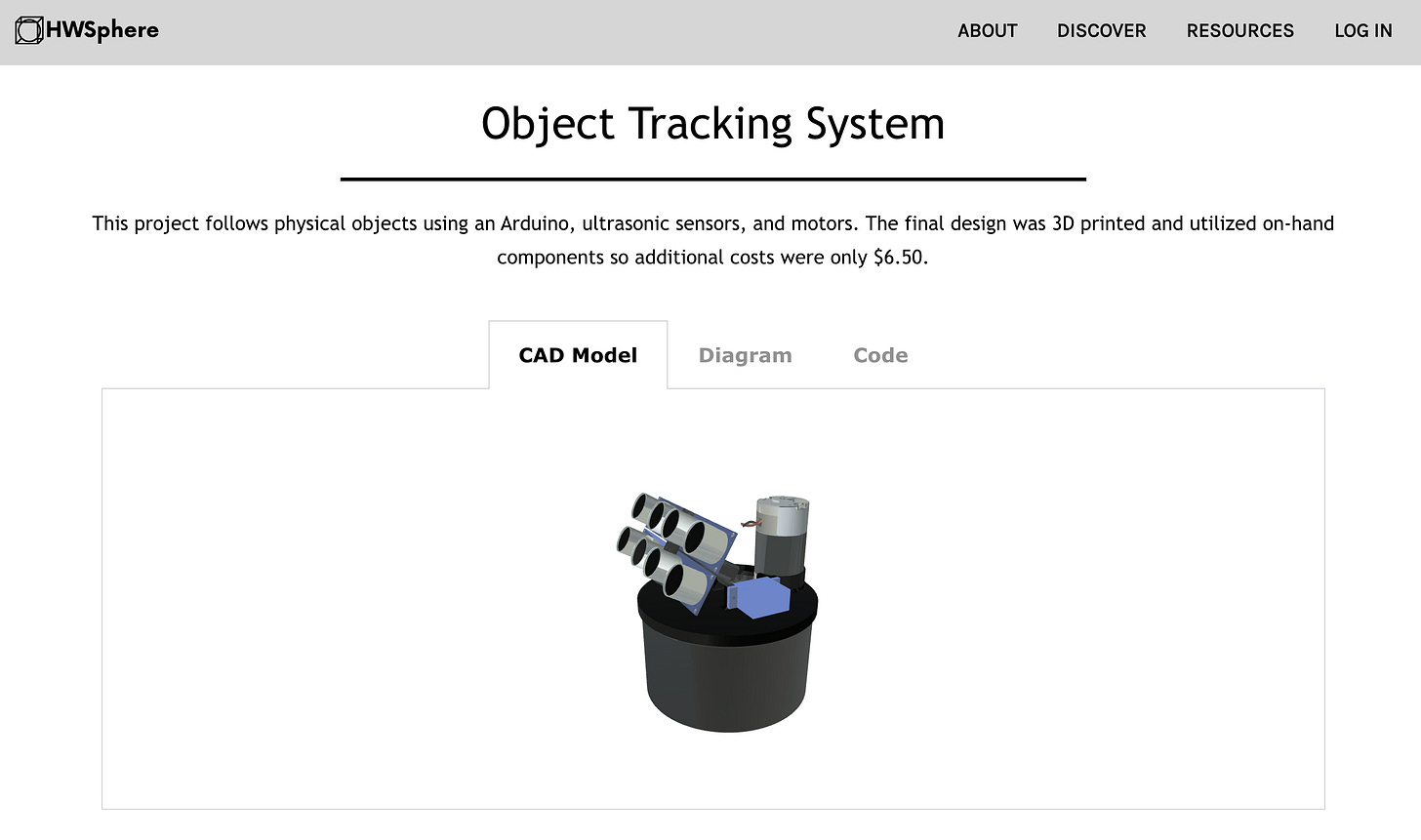
HWSphere is a website dedicated to hosting projects and portfolios with support for CAD models, code files, and more. Users can sign up for a profile page, upload their projects, and share their portfolio with their own URL (hwsphere.com/bf for example). Other projects and resources are made public as well for learning and collaboration.
Recent Engineering 🔧
- Three years ago Lucid Motors expected to build 90,000 EVs in 2024 - now their expected build volume for this year dropped to just below 9,000 EVs. Their initial projections were based on plans for their SUV, Gravity, which was delayed until last year due to supply chain and production problems. Despite current setbacks, they have promising plans to sell EV technology to Aston Martin and 100,000 vehicles to Saudi Arabia over the next decade.
- Sam Altman, OpenAI’s CEO, is trying to raise $7 trillion to build more chips as hardware is currently the limiting factor in AI development. Their models run on Nvidia GPUs - however Nvidia repeatedly states they can’t keep up with demand. If Altman receives this funding, it’ll be invested into building more factories and reimagining current industries and legacy supply chain models.
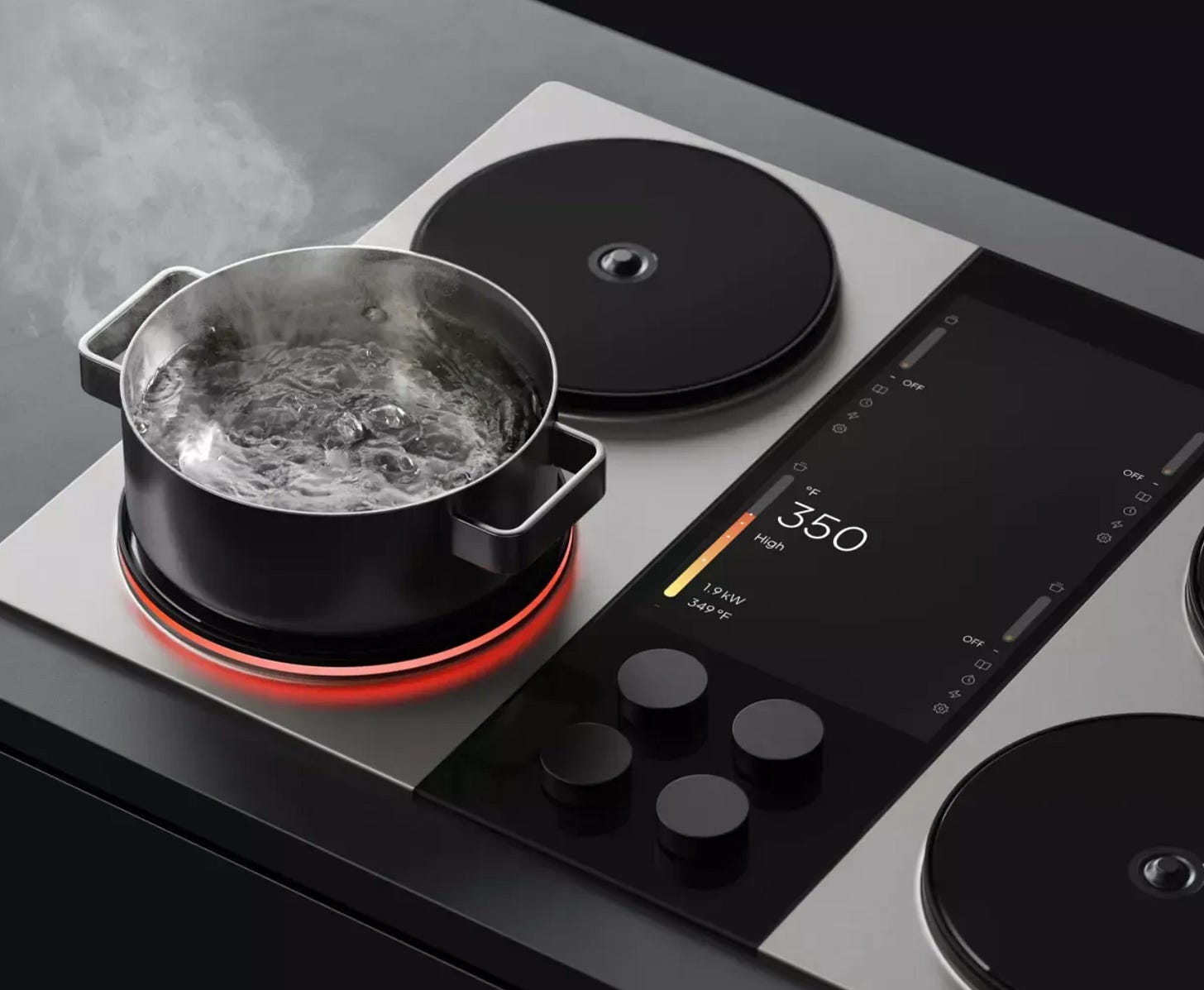
- A video by S3 features Impulse Labs’ stove that can boil a liter of water in 40 seconds. This works by integrating a battery into the device, allowing it to temporarily deliver up to 10kW of power compared to 3kW that traditional stoves produce. Impulse Labs plans to integrate these batteries across other residential appliances to act as an integrated power storage similar to the Tesla’s Powerwall.
- If you’re interested in more documentaries about hardware start-ups, Jason Carman has an awesome series of videos that’s updated regularly.
A video by 3D Printer Academy investigates which infill settings have the best strength-to-weight ratio. The tests were set up by loading a simply supported, 3D-printed beam at its midpoint to failure. The first set of tests used a grid infill and found the most optimal parameters to be 20% infill with 3-layer walls. The second set of tests, which varied the infill pattern, found the most optimal infills to be lighting, gyroid, and 3D honeycomb. Check out the full video here:
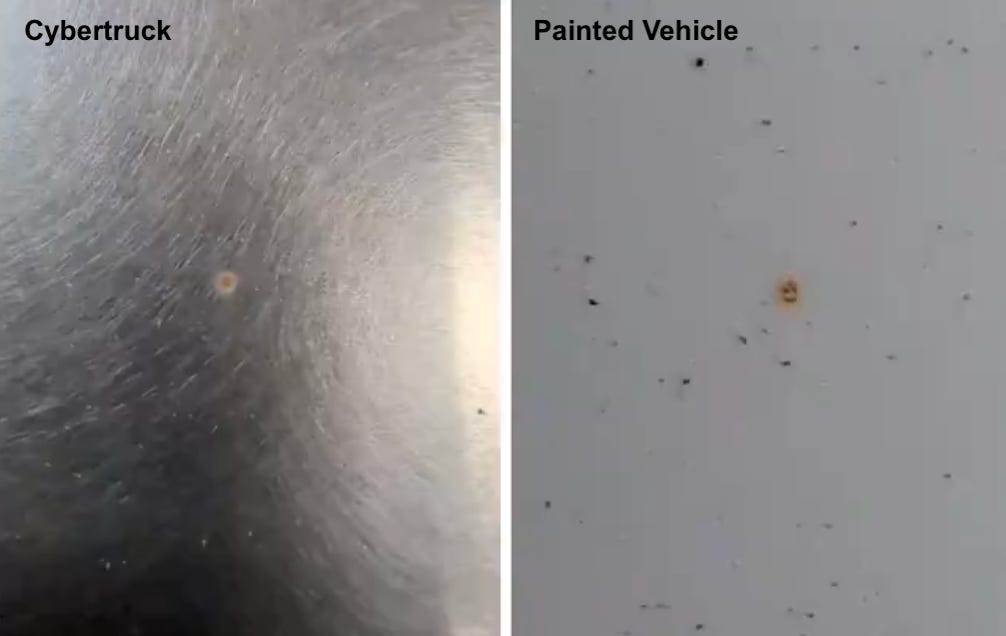
The Cybertruck was reportedly starting to rust in rain. However, this is actually due to the buildup of metal particles on the truck’s surface, known as rail dust, which begins to rust itself. Cybertruck’s lead engineer states their ultra-hard 30X cold-rolled stainless steel has better corrosion resistance than marine-grade steel and that these “rust spots” can be easily wiped away.
Startup News 🌱
- Monumental, a bricklaying robotics company, recently received $25 million in funding co-led by Plural. Its AI is derived from self-driving cars and it utilizes inexpensive robotic parts to provide services as fast and cheap as human labor.
- Altium, a provider of PCB design software, was recently acquired by Renesas Electronics for $5.8 billion. This acquisition is posed to streamline electronic design by integrating various aspects of development together such as schematic design, simulation, and manufacturing.
- Timekettle revealed a device, the X1 Interpreter Hub, capable of translating several languages at a time during group meetings. Its entire library consists of 40 languages and the device allows for bidirectional, simultaneous communication.
- Advanced Farm Technologies is a startup currently developing robots that specialize in fruit harvesting. Check out this POV shot from one of the robot’s camera used for image processing:
Hoopfit unveiled their basketball training device which integrates with preexisting hoops. This device can pass balls back to its user, automatically track progression, and provide feedback on form through its computer vision.

Resources for ME’s: Mechanical Linkage Simulator 🦿
Linkage is a free CAD program that allows you to design mechanical linkages and animate them for quick analysis. It current supports pivot/sliding joints and linear/angular inputs to the simulation with more features being built out.

Question of the Week: High-Pressure Spike vs Low-Pressure Cycles 🔄
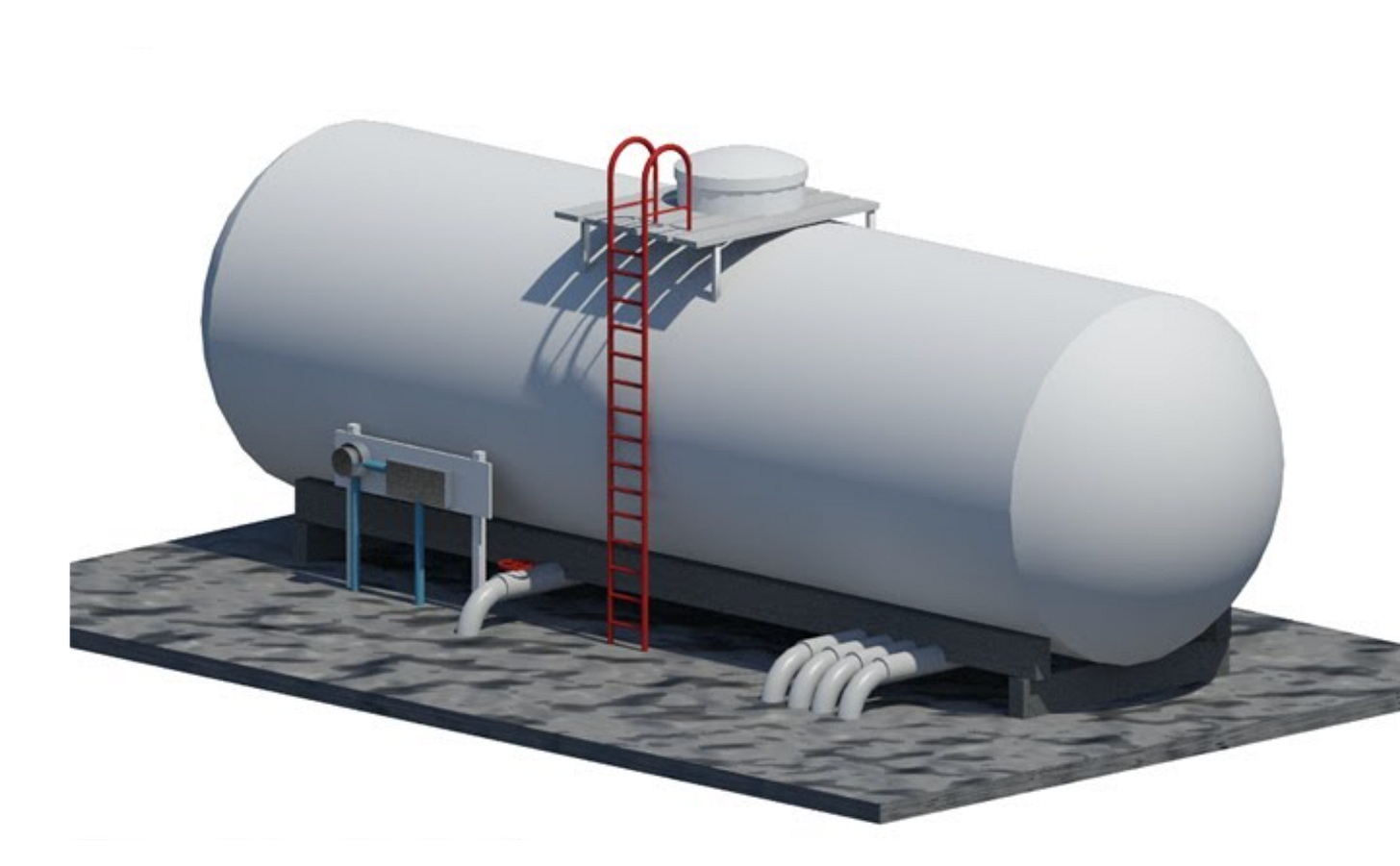
Would a pressure vessel fail due to low, cyclic pressures or a single high-pressure spike first? There are a few modes of failure that could occur for different reasons.
Starting with cyclic pressure, failure would be due fatigue that eventually causes microscopic imperfections to grow into a crack. If the range of this pressure is known, it can be compared against the material’s S-N curve to see how many cycles it could sustain.
For a single spike in pressure, this failure would be due to the stresses in the material surpassing its tensile strength. If this peak pressure is known, it can be compared against the material’s ultimate tensile strength to predict failure. However, manufacturing detects could also preexist in the structure that would cause stresses to be higher than expected due to stresses concentrating at crack tips.
External factors such as temperature variations and corrosion can also play a role in which failure mode will occur first. Understanding the limits and factors in the scenario given can help lead to a definitive answer.